
Alternatives · Parallel dialer
Looking for a Nooks alternative?
An honest comparison, including what Nooks does well, because if it fits your team you should stay on it.
Reviewed by Sujan ThapaliyaLast updated
Why do people look for a Nooks alternative?
Nooks is a parallel dialler built for SDR teams, with a virtual sales floor and coaching tools. Teams look for an alternative when per-seat pricing outgrows the budget or when they want the dialler and the phone system to be the same product.
Nooks
An honest read on Nooks
Written the way we would want a competitor to write about us.
Strengths
- Purpose-built parallel dialling with a strong SDR-floor experience
- Good coaching and call-review workflow for sales teams
- Focused product with a clear point of view
Trade-offs
- Priced per rep, which is expensive for teams that dial in bursts
- A layer on top of your telephony rather than the phone system itself
- Number ownership and reputation typically remain someone else's responsibility
Switching
When it is worth moving
| Trigger | What changes on AI Dialer |
|---|---|
| You want the dialler, the numbers, and the deliverability in one place | One platform owns the numbers, signs the calls, and runs the dialer. |
| Your dialling is seasonal or campaign-driven rather than constant | Spend tracks campaigns: a quiet month is a cheap month. |
| You need AI agents working the same lists alongside human reps | AI and human reps share lists, dispositions, and reporting. |
The structural difference
AI Dialer vs Nooks
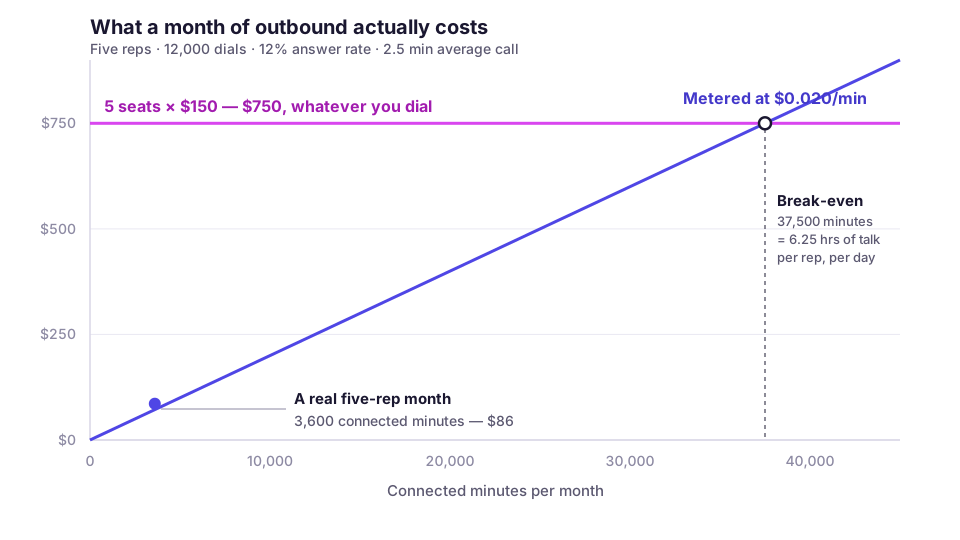
Nooks sits on top of your phone infrastructure and charges per rep. AI Dialer is the infrastructure: you own the numbers, they earn Attestation A, and the parallel dialler runs on them at usage prices.
How to actually compare these
Ignore headline rates and do one calculation: total monthly cost ÷ conversations your team has. Per-seat pricing wins when every seat dials constantly; usage pricing wins when volume is uneven, seasonal, or spread across part-time staff, which describes most teams.
Frequently asked questions
How many lines can you dial in parallel?
Three to five per rep is the usual working range. More lines produce more simultaneous answers than one rep can take, which increases drops rather than conversations.
Sources
- Combating Spoofed Robocalls with Caller ID Authentication — Federal Communications CommissionThe STIR/SHAKEN framework, the attestation levels carriers sign calls with, and the mandate requiring providers to authenticate caller ID.
- 47 U.S.C. § 227 — Restrictions on the use of telephone equipment — Cornell Legal Information InstituteThe Telephone Consumer Protection Act itself — the consent requirements, calling-hours limits, and private right of action.
- ITU-T Recommendation E.164 — The international public telecommunication numbering plan — International Telecommunication UnionThe international number format, the 15-digit maximum, and how country codes and national numbers compose.
Try it against your own numbers
No contract and no seat licences, so there is nothing to unwind if it does not suit you. Port a number, run a week of calls, and compare cost per conversation directly.
- Numbers port in
- No subscription
- Cancel anytime