
Dialers
Voicemail drop: leave the message without recording it again
Reviewed by Sujan ThapaliyaLast updated
What is a voicemail drop?
How it works
Voicemail drop in four steps
No implementation project. Most teams are dialling the same day they sign up.
- 1
Record the message once
One clean take, 18 to 25 seconds, naming the reason for the call and one next step. Several versions can be held per campaign so the message matches the list. - 2
Detect the greeting
Answering-machine detection identifies a mailbox rather than a human, so the drop fires on a greeting and never on a person saying hello. - 3
Drop and move on
The message is delivered in the background while the dialer connects the rep to the next contact. That handover is where the time saving actually comes from. - 4
Catch the callback
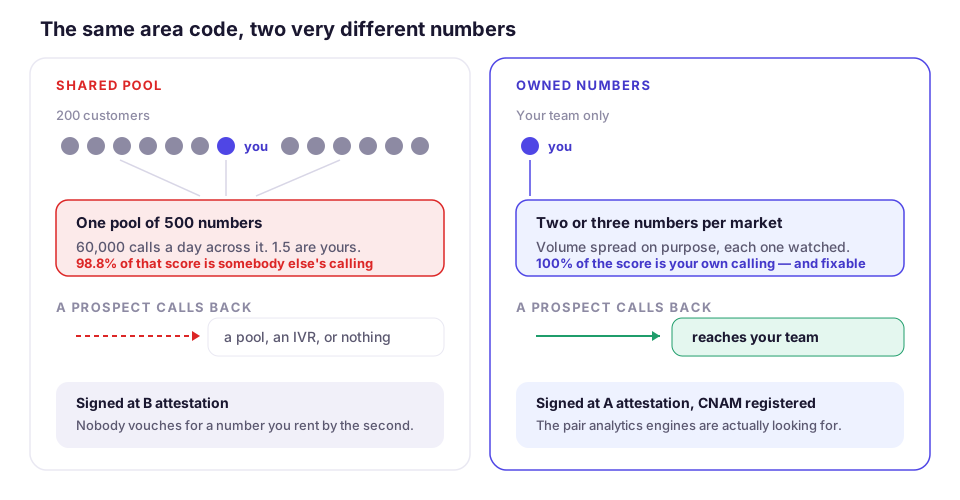
Returns ring the owned number the message came from, with the contact and campaign attached, so the rep who left it takes the call.
Capabilities
What you get
Manual or automatic trigger
Multiple messages per campaign
Drops from numbers you own
Attempt caps and suppression
Logged like a call
Consent and calling-window rules apply
When should you drop a voicemail, and when should you not?
| Situation | Drop? | Why |
|---|---|---|
| Second attempt on a warm inbound lead | Yes | They asked to be contacted; a message is the expected outcome |
| First cold attempt on a purchased list | No | No consent, and a message from an unknown number generates complaints rather than callbacks |
| Renewal or appointment reminder | Yes | Existing relationship, clear reason, high callback rate |
| Fourth attempt on someone who never returns calls | No | The list is telling you something; more messages will not change it |
| Service outage notification | Yes | Time-sensitive, expected, and the mailbox is the right channel |
Why most dropped voicemails get deleted
The failure is almost never the technology. It is the recording: dead air at the front, the company name before the reason, and a close that asks for a callback without saying what it is about. A drop multiplies whatever message you recorded, which is a problem when the message was never tested on a real listener.
- Name the person, so it does not open like a broadcast.
- Say who you are in a clause, not a sentence.
- Give the reason in terms of something they already have or want.
- One next step, the smallest possible one.
- Number once, slowly, at the end.
There is a fuller treatment, including the four routes for getting a message into a mailbox at all, in our guide to leaving a voicemail without calling.
Fit
Who a voicemail drop is right for
If none of these describe you, a different mode probably fits better; the comparison pages lay out the trade-offs honestly.
- SDR teams whose reps re-record the same voicemail dozens of times a day
- Follow-up cadences where a message is the intended outcome of attempt two
- Service and renewal reminders to contacts who already expect the call
- Any team measuring conversations per hour rather than dials per hour
Frequently asked questions
What is the difference between a voicemail drop and ringless voicemail?
Does the recipient know it was pre-recorded?
Do consent rules apply to voicemail drops?
How much time does it actually save?
Sources
- Telemarketing Sales Rule — Federal Trade CommissionDo-not-call obligations, abandonment-rate limits for predictive dialing, and required call disclosures.
- 47 U.S.C. § 227 — Restrictions on the use of telephone equipment — Cornell Legal Information InstituteThe Telephone Consumer Protection Act itself — the consent requirements, calling-hours limits, and private right of action.
- National Do Not Call Registry — Federal Trade CommissionThe registry that outbound calling lists must be scrubbed against.
Try voicemail drop without a contract
No seat licences, no minimum commitment. Add a number, top up a wallet, and start. Release the number whenever you like; your remaining balance stays yours.
- No subscription
- Owned numbers with Attestation A
- Compliance built in