
Insurance calling, in one paragraph
The problem
What actually goes wrong
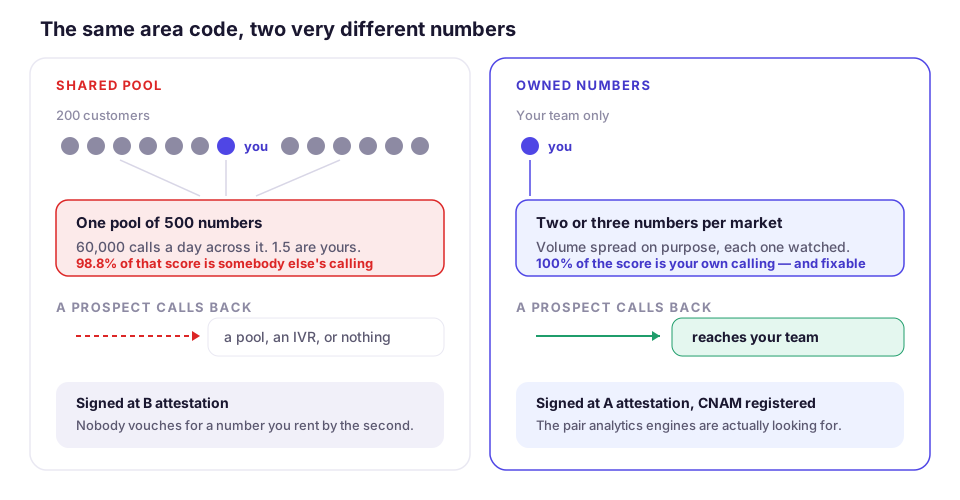
Agents buy the same shared leads as everyone else, so the winner is whoever calls first and reaches a human. But the same speed that wins the deal is what creates TCPA exposure, and shared caller-ID pools get labelled 'Spam Likely' within weeks of heavy dialling.
The numbers behind it
- Answer window that matters
- Under 60 seconds from lead submission
- Typical dial attempts per lead
- 6 to 9 across two weeks
- Statutory damages per TCPA violation
- $500 to $1,500
- What kills the number
- Volume on shared pool numbers, not the dialling itself
The pattern
How the phone behaves in insurance
| Line of business | When people answer | What the call has to establish |
|---|---|---|
| Auto renewal | Weekday evenings, 5–8pm local | Whether the current policy still fits, before price |
| Home and property | Weekends and evenings | A survey slot, not a quote |
| Medicare | Weekday mornings, before 11am | Eligibility window and permission to continue |
| Final expense | Weekday afternoons | Who else needs to be on the call |
| Commercial lines | Business hours only | The renewal date and the incumbent broker |
What you get
Built for how insurance teams actually use the phone
Speed-to-lead dialling
Local presence that survives
Consent captured with the lead
Quoting calls, recorded and searchable
AI qualification before the agent
Compliance
The rules this industry lives under
These are enforced by the platform, not documented in a PDF you are expected to follow. This is a summary and not legal advice.
TCPA consent records
Prior express written consent stored per contact with its source, timestamp, and the exact language shown.
Federal and internal DNC
Suppression runs before dialling, and internal do-not-call requests apply instantly across every campaign.
Calling hours by contact time zone
Calls are constrained to 8am–9pm in the contact's own local time, enforced by the platform.
State recording rules
All-party-consent states get the announcement automatically; the consent event is stored with the recording.
Products
What insurance teams use most
Power dialer
AI voice agent
Call recording
Call tracking
Frequently asked questions
What is the best dialer for insurance agents?
Is auto-dialling insurance leads legal under the TCPA?
How do I stop my agency numbers being marked as spam?
Sources
- Combating Spoofed Robocalls with Caller ID Authentication — Federal Communications CommissionThe STIR/SHAKEN framework, the attestation levels carriers sign calls with, and the mandate requiring providers to authenticate caller ID.
- 47 U.S.C. § 227 — Restrictions on the use of telephone equipment — Cornell Legal Information InstituteThe Telephone Consumer Protection Act itself — the consent requirements, calling-hours limits, and private right of action.
- Telemarketing Sales Rule — Federal Trade CommissionDo-not-call obligations, abandonment-rate limits for predictive dialing, and required call disclosures.
Set this up for your insurance team today
No implementation project and no seat licences. Claim your numbers, import your list, and start; the compliance guardrails are on by default.
- Same-day setup
- No subscription
- Compliance enforced by the platform