
Numbers & carriers
Branded caller ID: your name on the screen, signed at Attestation A
Reviewed by Sujan ThapaliyaLast updated
What is a branded caller id?
How it works
Branded caller ID in four steps
No implementation project. Most teams are dialling the same day they sign up.
- 1
Own the numbers first
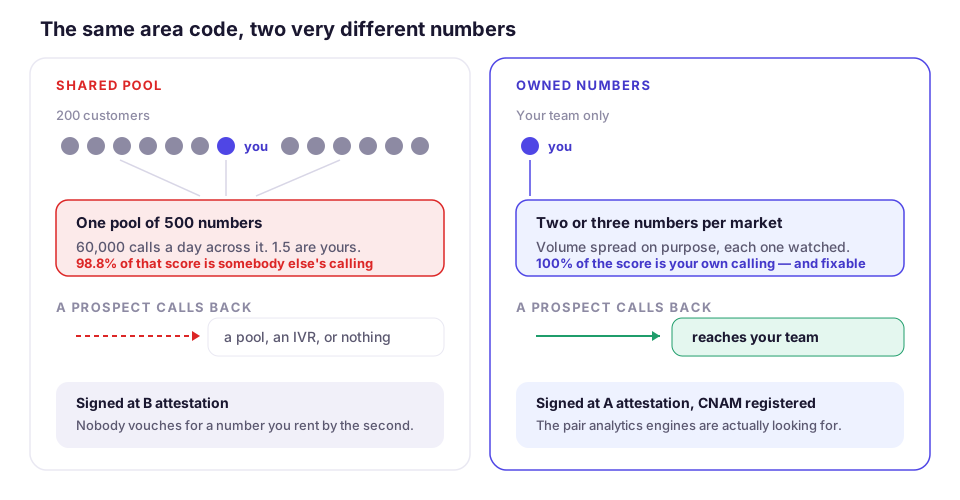
A name can only be attached to a number you control. Numbers rented from a shared pool cannot carry your brand, because they are not yours and their reputation is not yours either. - 2
Register the name
Your business name is written to the caller-name record for each number, within the 15-character limit the format allows. We handle the registration rather than handing you a form. - 3
Sign every call at Attestation A
Because the numbers are provisioned to you and verified, calls are signed with full attestation — the carrier is asserting both that it knows you and that you are entitled to use the number. - 4
Monitor and remediate
Numbers are checked for spam labelling across the major carrier analytics engines, and a number that starts to attract a label is flagged before your answer rate tells you.
Capabilities
What you get
CNAM registration on every owned number
Attestation A signing
Label monitoring
Remediation path
Consistent identity across channels
Per-number rotation controls
What actually decides what a handset displays
Three separate systems produce the thing the recipient sees, and confusing them is why the problem feels unfixable from the inside.
| Layer | What it decides | Who controls it |
|---|---|---|
| Caller-name record (CNAM) | The text that displays with the number | You, through registration on numbers you own |
| STIR/SHAKEN attestation | Whether the far-end carrier believes the call is genuinely yours | Your originating provider, and only at A if the number is provisioned to you |
| Carrier analytics | Whether to add a spam label, or block the call outright | Third-party analytics providers, scoring your calling pattern |
Why a shared number pool caps what you can achieve
On a shared pool, the numbers are provisioned to the platform, not to you. Two things follow. The name attached to the number cannot be yours, because the number is not. And the attestation level caps below full, because the provider cannot assert that you are entitled to a number it hands to a different customer next quarter.
The reputation problem is worse than the identity one. A pooled number carries the calling history of everyone who used it before you, which you cannot see and cannot fix. The full mechanics are in number reputation management.
What to do when a number does get labelled
- Test it properly — call a handset on each major network from the number. A label on one network is not a label on all three.
- Stop calling from that number while you work on it. Continuing feeds the pattern that produced the label.
- Check the pattern, not the number: dial volume per day, average call duration, and answer rate are what the analytics engines score.
- Submit the remediation evidence, then let the number rest before returning it to rotation.
- Fix the cause. A number that gets relabelled within a fortnight was never the problem.
Rotating numbers is not a fix
Fit
Who a branded caller id is right for
If none of these describe you, a different mode probably fits better; the comparison pages lay out the trade-offs honestly.
- Teams whose answer rate dropped after moving to a new number pool
- Businesses whose callbacks matter more than their dial volume
- Regulated sellers who need calls demonstrably attributable to them
- Anyone currently displaying as a bare number in an unfamiliar area code
Frequently asked questions
What is the difference between CNAM and STIR/SHAKEN?
Why does my business name show on some phones and not others?
How long is a caller ID name allowed to be?
Can I get Attestation A on numbers I rent from someone else?
Does branded caller ID stop calls being marked as spam?
Sources
- ITU-T Recommendation E.164 — The international public telecommunication numbering plan — International Telecommunication UnionThe international number format, the 15-digit maximum, and how country codes and national numbers compose.
- North American Numbering Plan Administrator — NANPAArea code assignments, relief planning, and which codes are in service across the North American Numbering Plan.
- Combating Spoofed Robocalls with Caller ID Authentication — Federal Communications CommissionThe STIR/SHAKEN framework, the attestation levels carriers sign calls with, and the mandate requiring providers to authenticate caller ID.
Try branded caller id without a contract
No seat licences, no minimum commitment. Add a number, top up a wallet, and start. Release the number whenever you like; your remaining balance stays yours.
- No subscription
- Owned numbers with Attestation A
- Compliance built in