
Pricing
No seats. No subscription. Pay for what you actually use.
Numbers from $1.26 a month. Calls from $0.020 a minute, billed per second from a prepaid wallet. Everything else (users, dialing modes, recording, compliance) is included.
- No seat licences
- No setup fee
- No minimum term
Reviewed by Sujan ThapaliyaLast updated
How much does AI Dialer cost?
Estimator
What your team would actually pay
Every rate below comes from the same published tables further down this page, so this is an estimate of our real prices rather than a lead-capture form with a number attached. It runs in your browser and nothing is submitted.
Estimate your monthly bill
Published rates, your volumes. Nothing is sent anywhere.
Estimated monthly total
$86.64
1,512 answered calls · 3,780 connected minutes · $0.06 per conversation
Same team on a $150.00 seat licence
$750.00
$663.36 less a month here, before the licence’s usage charges.
- Calls — 3,780 min at $0.020
- $75.60
- Numbers — 8 at $1.38
- $11.04
- Platform fee & seat licences
- $0.00
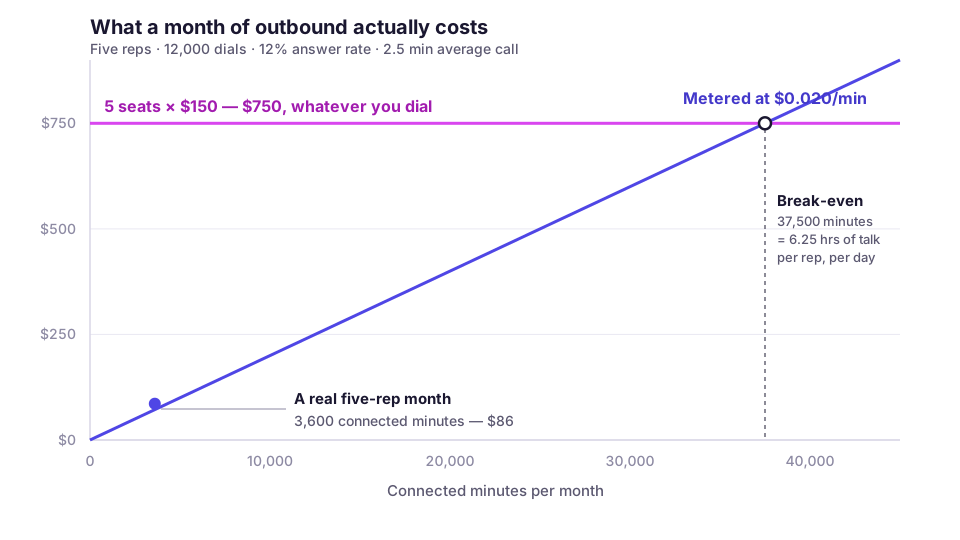
At $0.020 a minute, a $150.00 seat licence only pays for itself above 6.0 hours of live talk time per person per working day. This team is at 0.6 hours.
Covers calling and number rental, the two meters with published standing rates. SMS, AI voice agent minutes and live translation bill from the same wallet at the rate shown in-app before you send or start, and are not included in this figure. Calls are billed per second, so short calls cost less here than the round numbers above suggest.
What you pay for
Six things, and only when you use them
Phone numbers
Calls
SMS & MMS
AI voice agents
Live translation
Everything else
What is not on the bill
- Platform or subscription fee
- Per-user seat licence
- Setup or onboarding fee
- Minimum seat count or annual commitment
- Termination fee for releasing a number
- Surcharges for compliance features
Example rates
What calling actually costs
Published USD rates for the destinations we hold wholesale pricing on. Every figure is the carrier cost plus a flat 20% margin, rounded up to the nearest half-cent, with no per-destination mark-up games. Live rates for all 100+ countries appear in-app before a call is placed.
| Destination | Outbound per minute |
|---|---|
| United States | $0.020 |
| Canada | $0.020 |
| Singapore | $0.020 |
| United Kingdom | $0.025 |
| Germany | $0.025 |
| France | $0.025 |
| Australia | $0.030 |
| India | $0.085 |
| Nepal | $0.145 |
| United Arab Emirates | $0.195 |
Per-second billing, not per-minute rounding
Number rental
What a phone number costs per month
Same policy as calling: the carrier's monthly rental plus a flat margin. Release a number and the charge stops the same day; there is no minimum term and no termination fee.
| Country | Number types | From, per month |
|---|---|---|
| United States | Local & toll-free | $1.38 |
| Canada | Local & toll-free | $1.38 |
| United Kingdom | Local & mobile | $1.26 |
| France | Local | $1.32 |
| Ireland | Local | $1.44 |
| Sweden | Local & mobile | $1.56 |
| Germany | Local | $1.80 |
| Netherlands | Local | $1.80 |
| Spain | Local | $1.98 |
| Singapore | Local | $4.80 |
| New Zealand | Local | $6.60 |
| Australia | Local & mobile | $7.80 |
Numbers are available in over 100 countries. The table shows the markets we publish standing prices for; everywhere else, the live rate appears in number search before you claim anything.
How it works
Prepaid wallet, no invoices to chase
You top up, usage draws down, and every charge is itemised against the call or message that produced it.
- 1
Top up your wallet
Add credit whenever you like, or set auto top-up so a campaign never stalls at an awkward moment. - 2
Claim the numbers you need
Each number's monthly rate is charged from the wallet. Release it and the charge stops the same day. - 3
Use the platform
Calls, messages, and AI minutes draw down as they happen, at the rate shown before you start. - 4
See exactly where it went
Every charge is itemised against the call, message, or agent session that produced it, with no bundled line items to reverse-engineer.
Comparison
Why usage pricing usually wins
Per-seat pricing charges for capacity whether or not it gets used. That is a perfectly reasonable model when every seat dials constantly, all year, and a poor one for everyone else: part-time staff, seasonal campaigns, teams whose volume moves with the pipeline, and the licences nobody has logged into since March.
The honest way to compare is one number: total monthly cost divided by conversations had. Run it against your own volume for a month rather than against a pricing page. If seats win for your shape of team, they win, but most teams find they have been paying for capacity rather than for calls.
Frequently asked questions
How is the price calculated?
Is there a monthly subscription?
How much does an auto dialer cost?
How do I work out what I would spend?
Why do some AI voice platforms advertise a lower per-minute rate?
Why are SMS, AI minutes and translation not in the tables?
Are there setup fees or contracts?
What happens if my wallet runs out mid-call?
Do you charge extra for compliance features?
Sources
- Combating Spoofed Robocalls with Caller ID Authentication — Federal Communications CommissionThe STIR/SHAKEN framework, the attestation levels carriers sign calls with, and the mandate requiring providers to authenticate caller ID.
- 47 U.S.C. § 227 — Restrictions on the use of telephone equipment — Cornell Legal Information InstituteThe Telephone Consumer Protection Act itself — the consent requirements, calling-hours limits, and private right of action.
- ITU-T Recommendation E.164 — The international public telecommunication numbering plan — International Telecommunication UnionThe international number format, the 15-digit maximum, and how country codes and national numbers compose.
Start with a wallet and one number
No card required to look around, no contract to sign, and nothing to unwind if it does not suit you. Claim a number, top up, and place a call.
- No subscription
- Per-second billing
- Cancel anytime