
Solutions · Real estate
Dialer and calling software for real estate agents and investors
Reviewed by Sujan ThapaliyaLast updated
Real estate calling, in one paragraph
The problem
What actually goes wrong
Owner lists are cold, often stale, and heavily called by competitors. Answer rates sit in the low single digits, so throughput matters, but blasting a purchased list from one number is the fastest way to get that number labelled and your callbacks lost.
The numbers behind it
- Typical cold-list answer rate
- 3% to 8%
- Dials per listing appointment
- Often 150 to 400
- Highest-value follow-up
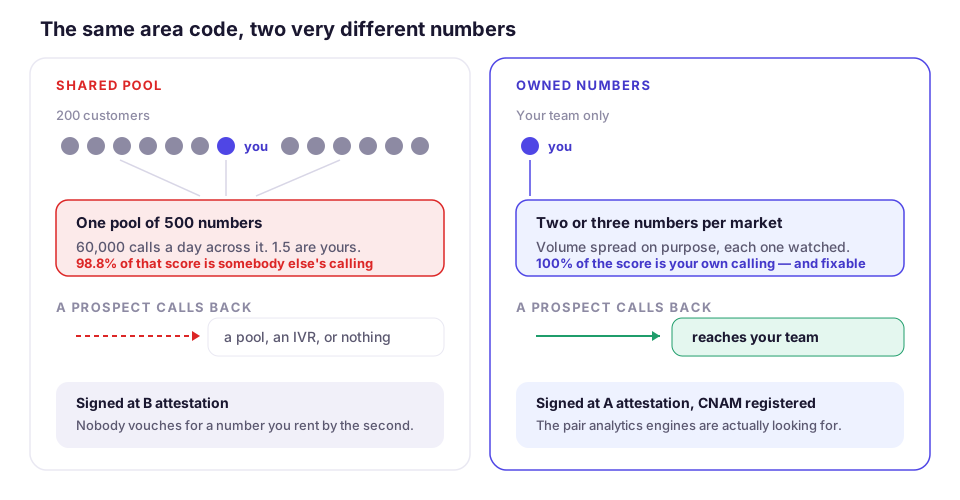
- The callback, which needs a number that routes back to you
- Biggest hidden cost
- Numbers burned by volume, not the dialling minutes
The pattern
How the phone behaves in real estate
| Lead source | Realistic time to first contact | What it costs to be late |
|---|---|---|
| Portal enquiry | Under 5 minutes | The enquirer contacts three agents; order decides who shows the property |
| Own website form | Under 15 minutes | Still competitive, but interest cools within the hour |
| Open-house sign-in | Same day | Recall of which property fades overnight |
| Expired listing | Within 48 hours of expiry | Every other agent is calling the same list |
| Past client | Scheduled, not urgent | Nothing — but only if it is genuinely scheduled |
What you get
Built for how real estate teams actually use the phone
Parallel dialling for cold lists
Local presence per market
Ringless voicemail follow-up
List hygiene before dialling
CRM write-back
Compliance
The rules this industry lives under
These are enforced by the platform, not documented in a PDF you are expected to follow. This is a summary and not legal advice.
DNC scrubbing on every list
Skip-traced lists are full of registered numbers. Scrubbing happens before dialling, not as an afterthought.
Calling hours per contact
Enforced in the contact's own time zone. Critical when you farm markets across several states.
Ringless voicemail treated as a call
The FCC treats ringless voicemail as a call under the TCPA. Consent rules apply, and the platform enforces them.
Products
What real estate teams use most
Parallel dialer
Ringless voicemail
Power dialer
Business SMS
Frequently asked questions
Can I cold call homeowners from a skip-traced list?
Do I need a different number for each market?
Sources
- Combating Spoofed Robocalls with Caller ID Authentication — Federal Communications CommissionThe STIR/SHAKEN framework, the attestation levels carriers sign calls with, and the mandate requiring providers to authenticate caller ID.
- 47 U.S.C. § 227 — Restrictions on the use of telephone equipment — Cornell Legal Information InstituteThe Telephone Consumer Protection Act itself — the consent requirements, calling-hours limits, and private right of action.
- Telemarketing Sales Rule — Federal Trade CommissionDo-not-call obligations, abandonment-rate limits for predictive dialing, and required call disclosures.
Set this up for your real estate team today
No implementation project and no seat licences. Claim your numbers, import your list, and start; the compliance guardrails are on by default.
- Same-day setup
- No subscription
- Compliance enforced by the platform