
Analytics
Call tracking software: know which marketing makes the phone ring
Reviewed by Sujan ThapaliyaLast updated
What is a call tracking?
How it works
Call tracking in four steps
No implementation project. Most teams are dialling the same day they sign up.
- 1
Assign numbers to sources
One number per channel for offline media, or a rotating pool for web sessions. - 2
Swap numbers on the page
A small script replaces the displayed number per visitor, carrying the referrer, campaign, and keyword into the call record. - 3
Route transparently
Calls forward to your real line. The caller never sees a difference; you get full attribution. - 4
Score the conversation
Recording and transcription turn calls into outcomes (qualified, booked, sold), not just call counts.
Capabilities
What you get
Keyword-level attribution
Local numbers anywhere
Transcripts and scoring
Recording-consent controls
What call tracking can and cannot tell you
Call tracking answers one question precisely: which number did this caller dial, and therefore which advertisement, page or campaign produced the call. Everything beyond that — whether the call was any good, whether it converted, what it was about — comes from the conversation rather than from the number.
| Question | Answered by | Precision |
|---|---|---|
| Which campaign produced this call? | The number dialled (DNIS) | Exact |
| Which keyword or session? | Dynamic number insertion | Good, within session limits |
| Was the call qualified? | Disposition or transcript analysis | Depends on discipline |
| Did it convert? | CRM write-back | Only if the loop is closed |
The pool-size mistake
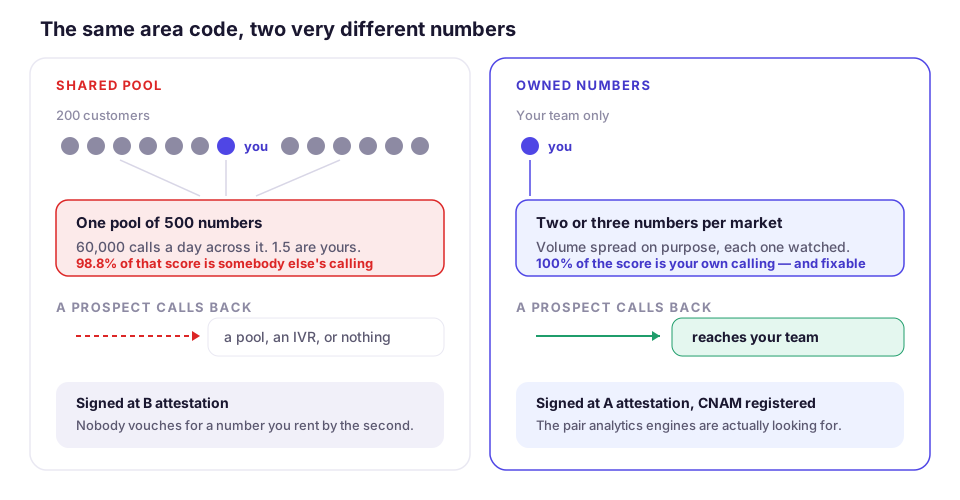
Dynamic number insertion swaps the displayed number per visitor session so a call can be attributed to a source. It needs enough numbers that two concurrent visitors never share one, and teams routinely under-size the pool to save on rentals — which produces attribution that is confidently wrong rather than merely absent.
Size the pool from peak concurrent sessions and the session window, not from monthly traffic. And keep the numbers long enough for callbacks to still land: a number recycled the same week will ring a stranger when the prospect finally returns the call.
Fit
Who a call tracking is right for
If none of these describe you, a different mode probably fits better; the comparison pages lay out the trade-offs honestly.
- Agencies proving phone-call ROI to clients
- Multi-location businesses comparing markets
- High-ticket services where the phone closes the deal
Frequently asked questions
Will call tracking hurt my local SEO?
How many tracking numbers do I need?
Sources
- Combating Spoofed Robocalls with Caller ID Authentication — Federal Communications CommissionThe STIR/SHAKEN framework, the attestation levels carriers sign calls with, and the mandate requiring providers to authenticate caller ID.
- 47 U.S.C. § 227 — Restrictions on the use of telephone equipment — Cornell Legal Information InstituteThe Telephone Consumer Protection Act itself — the consent requirements, calling-hours limits, and private right of action.
Try call tracking without a contract
No seat licences, no minimum commitment. Add a number, top up a wallet, and start. Release the number whenever you like; your remaining balance stays yours.
- No subscription
- Owned numbers with Attestation A
- Compliance built in