
Free tool
Test phone number generator
Format-valid sample numbers for fixtures, demos, and form-validation tests, drawn from regulator-reserved fiction ranges wherever one exists.
- No sign-up
- Runs in your browser
- Nothing is sent to a server
Reviewed by Sujan ThapaliyaLast updated
Generate test numbers
Format-valid numbers for seeding fixtures, demos, and form-validation tests. Where a regulator publishes a reserved fiction range, the generator uses it.
What number should you use for testing?
Step by step
How to use the test number generator
- 1
Choose a country and number type
Test numbers are drawn from ranges regulators reserve for drama and documentation, so they are guaranteed never to reach a real subscriber. - 2
Generate as many as you need
Use them for seeding fixtures, filling staging databases, and screenshotting a UI without exposing anyone's real number. - 3
Never use a real-looking number instead
Inventing a plausible number rather than using a reserved one is how test suites end up dialling a stranger, and how screenshots end up publishing a customer's phone number.
How it works
Why a made-up number is not a safe test number
A phone number that looks fictional usually is not. Type nine plausible digits and there is a good chance you have written someone’s actual mobile number, and test suites run on schedules, so a mistake here does not fail once, it fails repeatedly at 3am for as long as nobody notices.
Regulators solved this by carving out permanently unassignable ranges. Nothing in them can ever be issued to a subscriber, which is exactly the property a test fixture needs.
Where a country publishes no reserved range, this tool generates a number matching the national format and says so plainly. Treat those as string fixtures for validation tests, never as a destination for an outbound call or message.
If what you actually need is a working number you control (for testing a call flow end to end, or for keeping your personal number private), get a real one. A virtual number costs a little each month, receives calls and texts properly, and is yours.
Frequently asked questions
Are these real phone numbers?
What are the 555 numbers?
Can I use these to sign up for a service or receive a verification code?
What should I use for automated test suites?
Sources
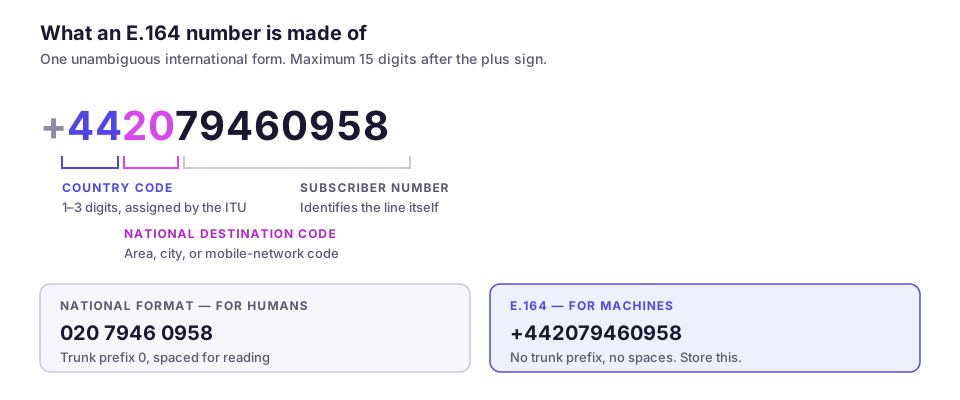
- ITU-T Recommendation E.164 — The international public telecommunication numbering plan — International Telecommunication UnionThe international number format, the 15-digit maximum, and how country codes and national numbers compose.
- ITU-T International Numbering Resources — International Telecommunication UnionThe assignment of country calling codes and the published national numbering plans they belong to.
Need a number that actually works?
Claim a real one in over 100 countries. It receives calls and texts, carries your business name on caller ID, and can be released whenever you like with no termination fee.
- No subscription
- Numbers in 100+ countries
- Compliance built in