
Alternatives · Cloud phone system (UCaaS)
Looking for a RingCentral alternative?
An honest comparison, including what RingCentral does well, because if it fits your team you should stay on it.
Reviewed by Sujan ThapaliyaLast updated
Why do people look for a RingCentral alternative?
RingCentral
An honest read on RingCentral
Written the way we would want a competitor to write about us.
Strengths
- Enormous feature breadth — phone, video meetings, team messaging, fax and SMS in one contract
- A global carrier footprint with local numbers and in-country compliance across dozens of markets
- A large integration catalogue and the compliance certifications enterprise procurement asks for
Trade-offs
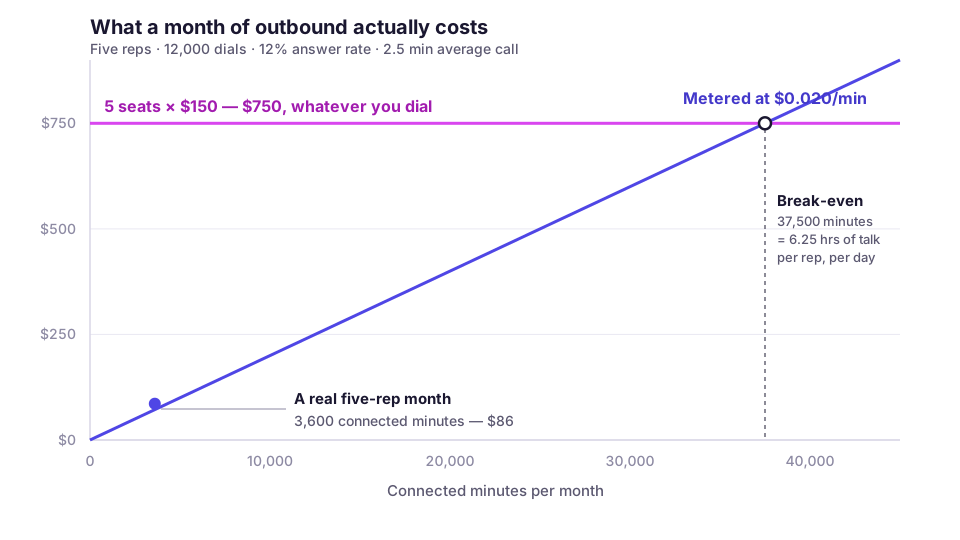
- Licensed per user per month, typically on an annual commitment, so cost tracks headcount rather than call volume
- Outbound dialling and contact-centre routing sit in a separate product tier rather than the core phone plan
- The breadth that suits a whole company is overhead for a team whose job is making calls
Switching
When it is worth moving
| Trigger | What changes on AI Dialer |
|---|---|
| You are paying for meetings, chat and fax that the team does not use | Usage pricing, owned numbers, and dialing in the base product. |
| Adding a dialler means adding a second contract on top of the phone licences | Usage pricing, owned numbers, and dialing in the base product. |
| Headcount changes with campaigns and an annual seat commitment does not | Usage pricing, owned numbers, and dialing in the base product. |
The structural difference
AI Dialer vs RingCentral
RingCentral sells a whole communications suite, per seat, usually for a year at a time. AI Dialer charges for usage — numbers, minutes, messages, AI — and concentrates on outbound dialling and deliverability. A company that needs video meetings, team chat and a global PBX is genuinely well served by RingCentral; this is not a replacement for those. A team whose day is spent dialling is paying for a great deal it never dials.
How to actually compare these
Frequently asked questions
Does AI Dialer replace RingCentral's video meetings and team chat?
Can I port my RingCentral numbers?
Is there a RingCentral alternative without an annual contract?
Sources
- Combating Spoofed Robocalls with Caller ID Authentication — Federal Communications CommissionThe STIR/SHAKEN framework, the attestation levels carriers sign calls with, and the mandate requiring providers to authenticate caller ID.
- 47 U.S.C. § 227 — Restrictions on the use of telephone equipment — Cornell Legal Information InstituteThe Telephone Consumer Protection Act itself — the consent requirements, calling-hours limits, and private right of action.
- ITU-T Recommendation E.164 — The international public telecommunication numbering plan — International Telecommunication UnionThe international number format, the 15-digit maximum, and how country codes and national numbers compose.
Try it against your own numbers
No contract and no seat licences, so there is nothing to unwind if it does not suit you. Port a number, run a week of calls, and compare cost per conversation directly.
- Numbers port in
- No subscription
- Cancel anytime