
Reference
Telephony glossary
The vocabulary of dialing, deliverability, and contact-centre operations, defined the way a practitioner would explain it, with the formula or the worked example where one exists.
Reviewed by Sujan ThapaliyaLast updated
Every entry opens with a self-contained definition in plain language, then explains how the thing actually behaves in production, including the failure modes, the regulatory limit, or the formula, where those apply. No entry is a sales pitch with a definition attached.
Dialing
Compliance
Numbering
- Alternate contact number
- ANI (automatic number identification)
- Area code
- Area code overlay
- Call blocking
- CNAM (caller ID name)
- Daytime phone number
- DID (direct inward dialing)
- DNIS (dialled number identification service)
- E.164
- Exit code
- Local presence
- Local vs toll-free number
- NPA-NXX
- Number porting
- Number reputation
- Phone extension
- Private number
- Restricted number
- Rich call data
- Spam Likely
- Toll-free number
- Trunk prefix
- Vanity number
Call centre operations
- ACD (automatic call distributor)
- Auto attendant
- Average handle time
- Average speed of answer
- Call barging
- Call disposition
- Call monitoring
- Call queue
- Cold transfer
- CSAT (customer satisfaction score)
- Erlang C
- First-call resolution
- Hunt group
- Inbound vs outbound calls
- Occupancy
- Phone tag
- Schedule adherence
- Service level
- Shrinkage
- Turnaround time (TAT)
- Warm transfer
- Wrap-up time
Voice technology
- Anonymous call rejection
- Answering machine
- Call waiting
- Calling restrictions
- Carrier voicemail
- Codec
- Conditional call forwarding
- DISA (direct inward system access)
- Dropped call
- DTMF (touch tones)
- ISDN (integrated services digital network)
- IVR (interactive voice response)
- Jitter
- Latency
- Message waiting indicator
- MOS (mean opinion score)
- Packet loss
- PBX (private branch exchange)
- PRI (primary rate interface)
- Ringback tone
- RTP (real-time transport protocol)
- SBC (session border controller)
- SIP (session initiation protocol)
- SIP trunk
- Toll fraud
- Unconditional call forwarding
- Voicemail to email
Frequently asked questions
Who is this glossary for?
Anyone who has to make a decision using one of these words: a manager reading a dialer contract, an ops lead setting an abandonment target, a founder trying to work out why calls show as spam. Each entry defines the term, then shows how it behaves in practice.
How are these definitions sourced?
From the regulations, standards and carrier documentation that actually govern each term — the FCC and FTC rules on abandonment and consent, the ITU numbering recommendation, CTIA messaging guidance, NANPA on area codes. Each page lists the sources its claims rest on.
What is the difference between the glossary and the guides?
A glossary entry defines a term and explains how it works. A guide walks you through doing something — cancelling call forwarding, setting up voicemail. If you need to know what a word means, start here; if you need to press buttons, start with the guides.
Can I suggest a term?
Yes, through the contact page. The list grows from the questions people actually ask, and terms that keep appearing in support conversations get written up before the ones that only appear in vendor marketing.
Sources
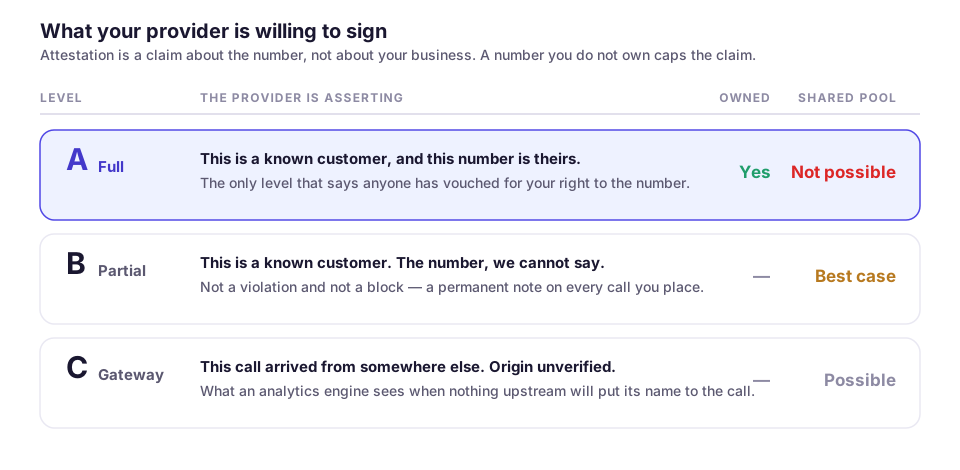
- Combating Spoofed Robocalls with Caller ID Authentication — Federal Communications CommissionThe STIR/SHAKEN framework, the attestation levels carriers sign calls with, and the mandate requiring providers to authenticate caller ID.
- 47 U.S.C. § 227 — Restrictions on the use of telephone equipment — Cornell Legal Information InstituteThe Telephone Consumer Protection Act itself — the consent requirements, calling-hours limits, and private right of action.
- ITU-T Recommendation E.164 — The international public telecommunication numbering plan — International Telecommunication UnionThe international number format, the 15-digit maximum, and how country codes and national numbers compose.
Which of these does the platform handle for you?
Pacing, abandonment limits, attestation, CNAM registration, consent records, calling hours: these are the things AI Dialer runs for you rather than documenting for you.
- No seat licences
- Compliance on by default
- Same-day setup