
Definition
In practice
How power dialing actually works
It typically doubles or triples manual dialling throughput. The gain comes from eliminating lookup, typing, ring-out, and note-taking, not from placing more simultaneous calls.
It is the right default for regulated industries, for teams smaller than about eight agents, and for any list where each conversation is valuable enough that dropping one is unacceptable.
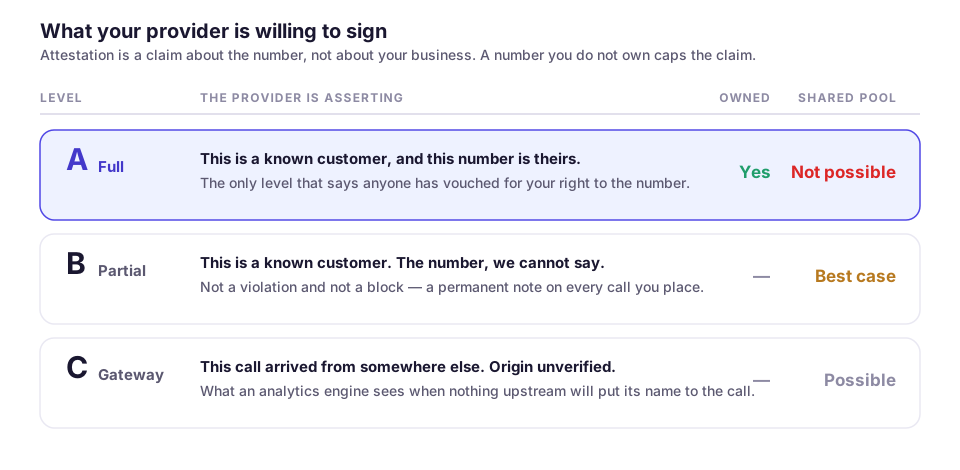
Because it never abandons calls, power dialing is also the mode that keeps a number's reputation intact. High dial volume with a low connect rate and very short durations is what analytics engines score, and dropping live answers adds complaints on top. One call per rep produces the cleanest pattern any dialer can.
Worked example
Power dialing: common questions
How much faster is power dialing than manual dialing?
Can a power dialer abandon calls?
Is a power dialer an auto dialer?
Sources
- Combating Spoofed Robocalls with Caller ID Authentication — Federal Communications CommissionThe STIR/SHAKEN framework, the attestation levels carriers sign calls with, and the mandate requiring providers to authenticate caller ID.
- 47 U.S.C. § 227 — Restrictions on the use of telephone equipment — Cornell Legal Information InstituteThe Telephone Consumer Protection Act itself — the consent requirements, calling-hours limits, and private right of action.
- ITU-T Recommendation E.164 — The international public telecommunication numbering plan — International Telecommunication UnionThe international number format, the 15-digit maximum, and how country codes and national numbers compose.
See power dialing in the product
A power dialer places one outbound call at a time from a loaded list, automatically dialling the next contact the moment the previous call ends. It removes manual dialling and hold time without the connection delay that makes predictive dialling feel robotic to the person who answers.