
Glossary · Dialing
What is Parallel dialing?
- Also called: multi-line dialer
Reviewed by Sujan ThapaliyaLast updated
Definition
In practice
How parallel dialing actually works
The difference from predictive dialling is who the lines belong to. Parallel lines belong to one named rep; predictive dialling forecasts across a pool of agents.
Connect latency is the whole game. If the bridge takes longer than about half a second after 'hello', the prospect hears the pause, knows they were auto-dialled, and the call is effectively over.
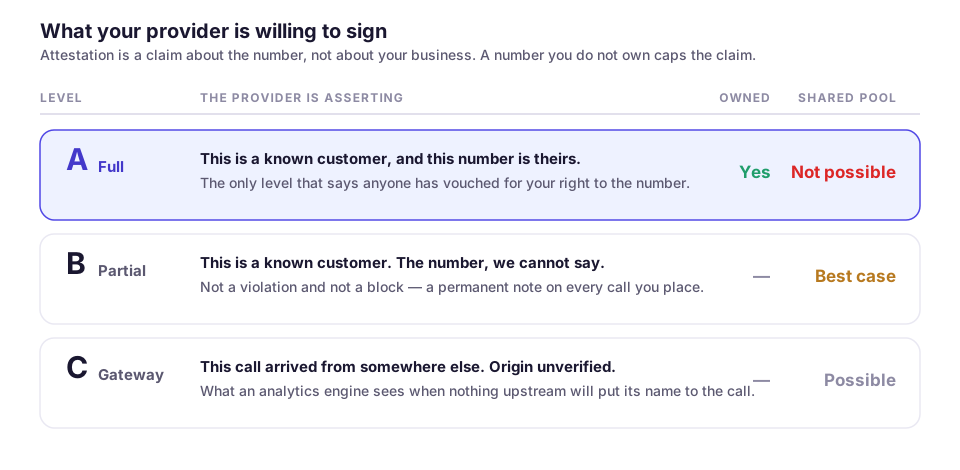
The mode also concentrates risk in a way power dialing does not. Every abandoned call is a complaint waiting to be filed, and complaints attach to the number rather than the campaign — so a fortnight of aggressive line counts can leave a number labelled long after the campaign that caused it has ended.
Worked example
Parallel dialing: common questions
How many lines should a parallel dialer run?
What happens when two people answer at the same time?
Does parallel dialing damage number reputation?
Sources
- Combating Spoofed Robocalls with Caller ID Authentication — Federal Communications CommissionThe STIR/SHAKEN framework, the attestation levels carriers sign calls with, and the mandate requiring providers to authenticate caller ID.
- 47 U.S.C. § 227 — Restrictions on the use of telephone equipment — Cornell Legal Information InstituteThe Telephone Consumer Protection Act itself — the consent requirements, calling-hours limits, and private right of action.
- ITU-T Recommendation E.164 — The international public telecommunication numbering plan — International Telecommunication UnionThe international number format, the 15-digit maximum, and how country codes and national numbers compose.
See parallel dialing in the product
A parallel dialer places several outbound calls at once for a single rep and connects the first one a human answers, dropping the rest. Because most cold calls go unanswered, dialling three to five lines in parallel produces several times as many live conversations per hour as one-at-a-time dialling.