
Numbers & carriers
SIP trunking: connect your PBX to the phone network
Reviewed by Sujan ThapaliyaLast updated
What is a sip trunking?
How it works
SIP trunking in four steps
No implementation project. Most teams are dialling the same day they sign up.
- 1
Point your PBX at the trunk
Register with credentials or authenticate by IP. Works with Asterisk, FreeSWITCH, FreePBX, 3CX, Avaya, Cisco, and anything else that speaks SIP. - 2
Bring your numbers
Port existing numbers in, or provision new local, national, and toll-free numbers in over 100 countries. - 3
Size the channels
Concurrent-call capacity scales on demand rather than in blocks of 23 like a PRI. - 4
Fail over
Multiple points of presence with automatic re-routing, so a single circuit or data-centre problem does not take your phones down.
Capabilities
What you get
Elastic channels
Encryption end to end
Attestation A on outbound
Per-second billing
Sizing a trunk: concurrency, not call volume
The single most common sizing error is buying channels against monthly minutes. A trunk carries concurrent calls, and concurrency is a function of call length and arrival rate rather than of total volume.
| Team | Calls per day | Average length | Peak concurrent |
|---|---|---|---|
| 10 SDRs, cold outbound | 800 | 2 min | 10–14 |
| 6 support agents, inbound | 150 | 9 min | 6–9 |
| Blended contact centre, 40 seats | 1,600 | 5 min | 35–45 |
| Reception only, 3 lines | 60 | 3 min | 3–5 |
Add headroom for the peak rather than the mean — the hour that matters is the one where everybody is on a call at once — and remember that a trunk sized to the average will fail every day at the same time and look like a fault.
What to ask a SIP provider before signing
- Can I port out, and how fast? The answer tells you what leaving will be like.
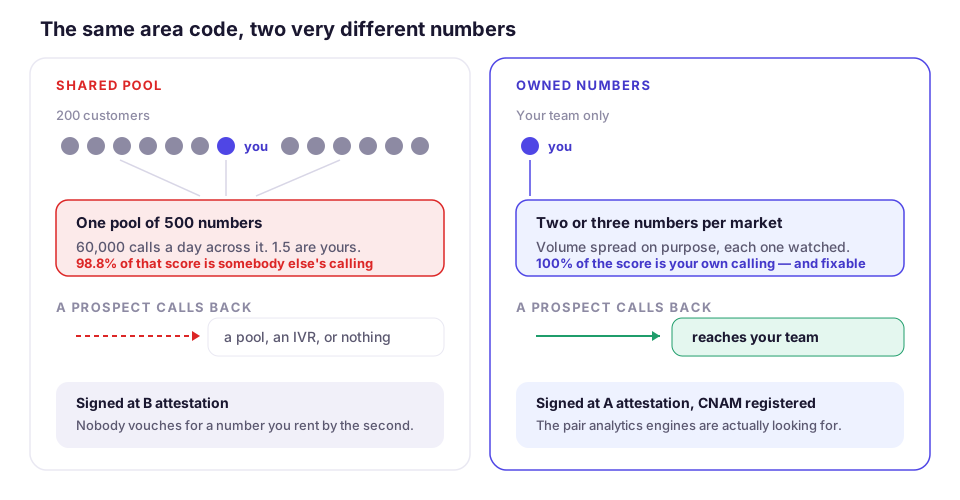
- What attestation do calls sign at, and on whose numbers? Full attestation needs numbers provisioned to you.
- Where does media route? A trunk that hairpins media through the wrong region adds latency you cannot fix locally.
- What are the concurrency and destination limits, and can I set them? These are your toll-fraud controls.
- How are rates published? A rate table you can read beats a quote you have to request every time you expand.
Fit
Who a sip trunking is right for
If none of these describe you, a different mode probably fits better; the comparison pages lay out the trade-offs honestly.
- Businesses replacing ISDN or PRI lines
- Existing PBX deployments that work and should not be thrown away
- Call centres needing burst capacity
- Software vendors terminating their own traffic
Frequently asked questions
How many SIP channels do I need?
Can I keep my existing numbers?
What internet connection does SIP need?
Sources
- ITU-T Recommendation E.164 — The international public telecommunication numbering plan — International Telecommunication UnionThe international number format, the 15-digit maximum, and how country codes and national numbers compose.
- North American Numbering Plan Administrator — NANPAArea code assignments, relief planning, and which codes are in service across the North American Numbering Plan.
- Combating Spoofed Robocalls with Caller ID Authentication — Federal Communications CommissionThe STIR/SHAKEN framework, the attestation levels carriers sign calls with, and the mandate requiring providers to authenticate caller ID.
Try sip trunking without a contract
No seat licences, no minimum commitment. Add a number, top up a wallet, and start. Release the number whenever you like; your remaining balance stays yours.
- No subscription
- Owned numbers with Attestation A
- Compliance built in