
Numbers & carriers
Hosted PBX: the phone system without the cabinet
Reviewed by Sujan ThapaliyaLast updated
What is a hosted pbx?
How it works
Hosted PBX in four steps
No implementation project. Most teams are dialling the same day they sign up.
- 1
Bring or buy the numbers
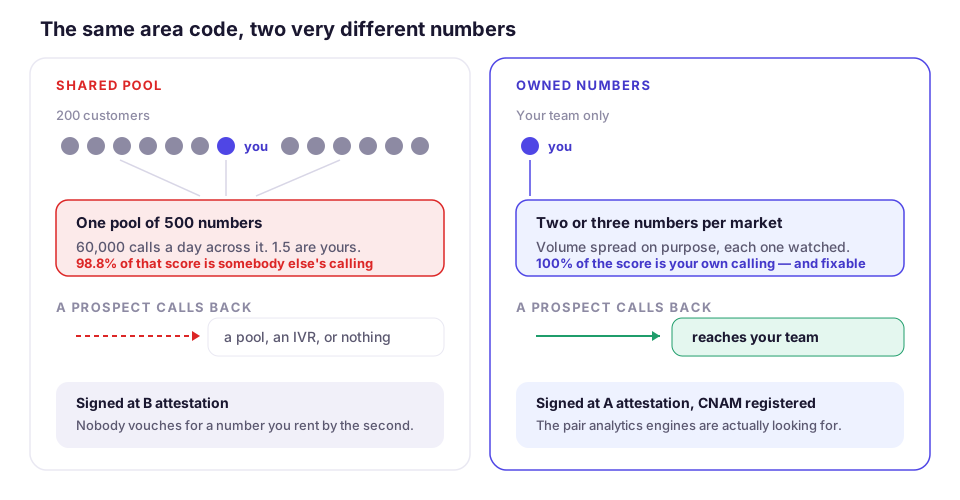
Port the numbers you already publish, or provision new ones. Either way they are yours, which is what makes caller identity and attestation work properly later. - 2
Create users and extensions
Each person gets an extension and, where it helps, a direct number. Softphones register instantly; desk phones can be provisioned from the same configuration. - 3
Build the call flow
Auto attendant, hours, hunt groups or queues, voicemail, and the fallbacks for each. This is the part that decides whether the system feels professional. - 4
Cut over and keep the old route live
Point the numbers when the flow is tested. Porting keeps them ringing throughout, so there is no window where customers reach nothing.
Capabilities
What you get
No hardware to maintain
Works wherever people are
Desk phones or softphones
Numbers you own
Usage pricing
Dialing and AI on the same system
Hosted or on-premises: what actually decides it
| Hosted PBX | On-premises PBX | |
|---|---|---|
| Adding capacity | A configuration change | Hardware, and often an engineer |
| Cost shape | Operating cost, scales with use | Capital cost, plus maintenance |
| Remote staff | Ordinary extensions | VPN or forwarding, with the quirks that brings |
| Site outage | System keeps running; calls reroute | System is in the building |
| Upgrades | Continuous, by the provider | Projects, scheduled and paid for |
| Control | Configuration, within what the platform allows | Total, including total responsibility |
The ISDN switch-off is the forcing function
Traditional digital lines are being withdrawn on national timetables that have already passed in some countries and are approaching in others. Businesses still on ISDN or a PRI face a migration whether they planned one or not, and the ones who plan it choose their replacement while the ones who do not take whatever is available at the deadline.
There are two honest paths. Keep the PBX and replace the lines with a SIP trunk, which is the smaller change and right when the system still suits you. Or move the system itself, which is right when the phone system is already the thing people complain about. Both keep your numbers.
Fit
Who a hosted pbx is right for
If none of these describe you, a different mode probably fits better; the comparison pages lay out the trade-offs honestly.
- Businesses still running an on-premises PBX facing an ISDN switch-off
- Teams with staff in more than one location
- Offices where half the seats barely use the phone and a per-seat licence wastes money
- Anyone who needs a new line today rather than after a site visit
Frequently asked questions
What is the difference between a hosted PBX and a SIP trunk?
Do I need special phones?
What happens if the internet goes down?
Can I keep my numbers?
Sources
- ITU-T Recommendation E.164 — The international public telecommunication numbering plan — International Telecommunication UnionThe international number format, the 15-digit maximum, and how country codes and national numbers compose.
- North American Numbering Plan Administrator — NANPAArea code assignments, relief planning, and which codes are in service across the North American Numbering Plan.
- Combating Spoofed Robocalls with Caller ID Authentication — Federal Communications CommissionThe STIR/SHAKEN framework, the attestation levels carriers sign calls with, and the mandate requiring providers to authenticate caller ID.
Try hosted pbx without a contract
No seat licences, no minimum commitment. Add a number, top up a wallet, and start. Release the number whenever you like; your remaining balance stays yours.
- No subscription
- Owned numbers with Attestation A
- Compliance built in