
What is a click to call?
How it works
Click to call in four steps
No implementation project. Most teams are dialling the same day they sign up.
- 1
Choose the surface
A button on a web page, click-to-dial from a CRM record, or a call placed by your own application through the API. The mechanics are the same; the integration differs. - 2
Decide who gets dialled first
Calling the agent first and bridging on answer means the customer never hears ringing on an unattended line. Calling the customer first is faster and riskier. - 3
Set the number that presents
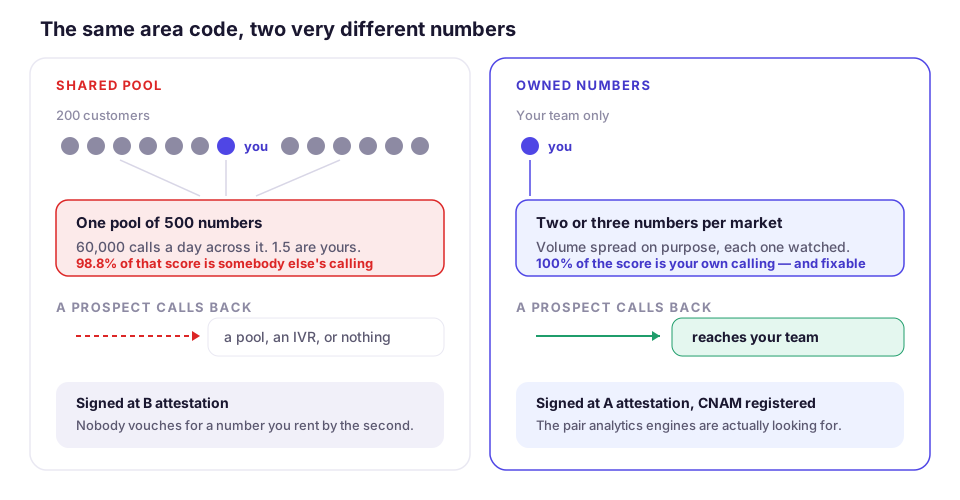
The caller ID the customer sees should be a number you own and answer — ideally local to them, always with your business name registered against it. - 4
Log it like a call
Recording, transcript, disposition and CRM write-back apply exactly as they do to a dialled call, because it is one.
Capabilities
What you get
Web call button
Click to dial in the CRM
REST API
Number masking
Agent-first bridging
Attribution intact
Why a call button beats a phone number on the page
A published number transfers the effort to the visitor: read it, key it, hope someone answers. Every step loses people, and none of it is measurable — a visitor who dialled from their own phone is invisible to you.
| tel: link or printed number | Click to call | |
|---|---|---|
| Who dials | The visitor | The platform, both sides |
| Attribution | None — the call arrives context-free | Page, campaign and session travel with it |
| Recording and transcript | Only if they reach a recorded line | Same as any platform call |
| Caller ID shown to them | Whatever your inbound line presents | A number you choose and own |
| If nobody is free | They hear ringing, then nothing | Offer a booked time instead of a failed call |
The API case: calls inside your own product
The same mechanism placed from your own backend covers a different set of problems: connecting a buyer to a seller, a passenger to a driver, a patient to a clinic — without either party learning the other's number. Both parties see a platform number rather than each other's, which is the reason marketplaces and logistics platforms build on a calling API instead of publishing numbers.
What matters when evaluating one: webhook events for every stage of the call, recordings retrievable by call id, and per-minute pricing you can model. All three are published here rather than quoted.
Fit
Who a click to call is right for
If none of these describe you, a different mode probably fits better; the comparison pages lay out the trade-offs honestly.
- Sites where the enquiry is worth more on the phone than in a form
- Sales teams working from CRM records all day
- Products that need to place calls between two users
- Marketplaces and logistics platforms that must keep both numbers private
Frequently asked questions
What is click to call?
Is a tel: link the same thing?
Should the agent or the customer be dialled first?
Does click to call need consent?
Sources
- Combating Spoofed Robocalls with Caller ID Authentication — Federal Communications CommissionThe STIR/SHAKEN framework, the attestation levels carriers sign calls with, and the mandate requiring providers to authenticate caller ID.
- 47 U.S.C. § 227 — Restrictions on the use of telephone equipment — Cornell Legal Information InstituteThe Telephone Consumer Protection Act itself — the consent requirements, calling-hours limits, and private right of action.
Try click to call without a contract
No seat licences, no minimum commitment. Add a number, top up a wallet, and start. Release the number whenever you like; your remaining balance stays yours.
- No subscription
- Owned numbers with Attestation A
- Compliance built in