
Glossary · Voice technology
What is Anonymous call rejection?
- Also called: acr, reject withheld calls
Reviewed by Sujan ThapaliyaLast updated
Definition
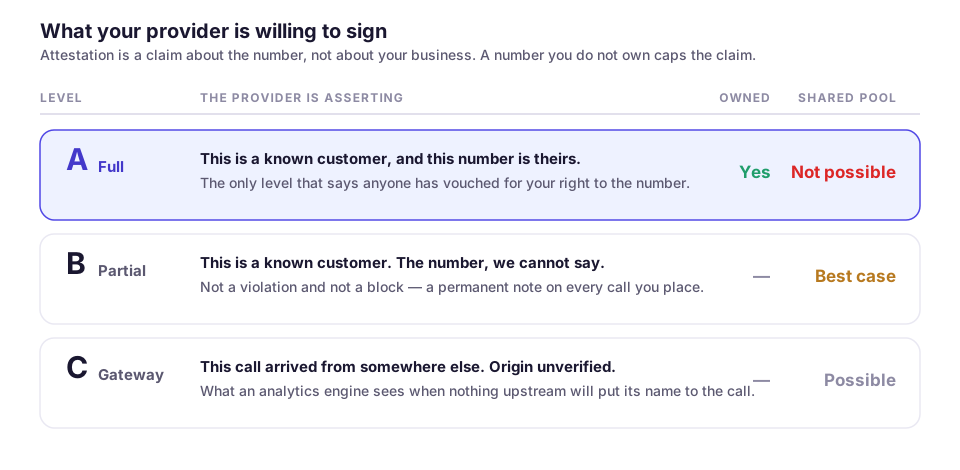
In practice
How anonymous call rejection actually works
It is effective against the subset of nuisance calling that withholds identity, and useless against the larger share that presents a spoofed or rotating number. Most unwanted calling now presents a number, so the feature solves a shrinking part of the problem.
The cost is silent: legitimate callers who withhold by default get refused with no record on your side. Switchboards, clinics and some public-sector lines withhold as standard.
On a business phone system the better pattern is to route withheld calls somewhere rather than refuse them — to an auto attendant or an AI receptionist that asks who is calling.
Worked example
Anonymous call rejection: common questions
Does anonymous call rejection block spam calls?
What does the caller hear?
Is there a better option for a business line?
Sources
- Combating Spoofed Robocalls with Caller ID Authentication — Federal Communications CommissionThe STIR/SHAKEN framework, the attestation levels carriers sign calls with, and the mandate requiring providers to authenticate caller ID.
- 47 U.S.C. § 227 — Restrictions on the use of telephone equipment — Cornell Legal Information InstituteThe Telephone Consumer Protection Act itself — the consent requirements, calling-hours limits, and private right of action.
- ITU-T Recommendation E.164 — The international public telecommunication numbering plan — International Telecommunication UnionThe international number format, the 15-digit maximum, and how country codes and national numbers compose.
See anonymous call rejection in the product
An auto attendant answers inbound calls with a recorded menu and sends each caller where they need to go, by keypress or by what they say. It is the front door of a phone system: no queueing, no agents, just directing traffic before anyone is involved.