Glossary · Numbering
What is Call blocking?
- Also called: blocked calls, carrier call blocking
Reviewed by Sujan ThapaliyaLast updated
Definition
In practice
How call blocking actually works
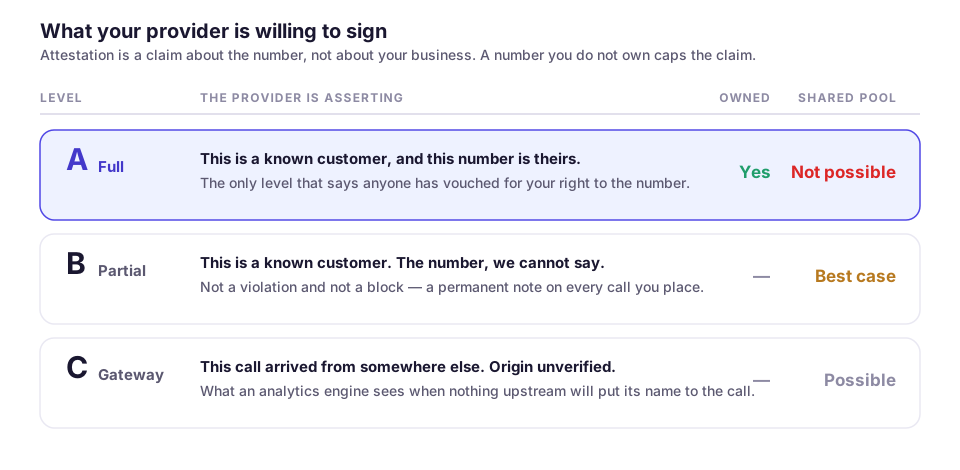
Carrier-level blocking is applied by analytics providers on behalf of terminating networks, using the same scores that produce spam labels. A number scored badly enough moves from labelled to blocked.
The invisibility is the operational problem: answer rate collapses while dial counts and dispositions look normal, because a blocked call often registers as unanswered rather than failed.
Remediation follows the same path as label removal — evidence, registration, and a change in the calling pattern that produced the score.
Blocking is also increasingly automatic rather than requested. Carriers now block or divert traffic that scores badly without the recipient asking, under regulatory pressure to reduce unwanted calls, which means a business can lose reachability to an entire network without a single customer complaining to anyone.
Worked example
Call blocking: common questions
How do I know if my number is being blocked?
Can a blocked number be unblocked?
Is blocking the same as being labelled Spam Likely?
Sources
- Combating Spoofed Robocalls with Caller ID Authentication — Federal Communications CommissionThe STIR/SHAKEN framework, the attestation levels carriers sign calls with, and the mandate requiring providers to authenticate caller ID.
- 47 U.S.C. § 227 — Restrictions on the use of telephone equipment — Cornell Legal Information InstituteThe Telephone Consumer Protection Act itself — the consent requirements, calling-hours limits, and private right of action.
- ITU-T Recommendation E.164 — The international public telecommunication numbering plan — International Telecommunication UnionThe international number format, the 15-digit maximum, and how country codes and national numbers compose.
See call blocking in the product
Branded caller ID puts your business name on the recipient's screen instead of a bare number. In North America it works through CNAM, the caller-name record attached to a number, combined with STIR/SHAKEN signing that lets the terminating carrier trust the call is really from you.