Definition
In practice
How number reputation actually works
Reputation is per number and persistent. It survives being released and reassigned, which is why a newly rented number can carry someone else's damage.
It is detected by measurement, not by intuition: the leading indicator is answer rate on one number diverging from the pool average, well before anyone reports a label.
The management pattern is simple: daily dial caps per number, rotation across a pool you own, continuous monitoring, and automatic quarantine of any number whose answer rate drops sharply.
Reputation also travels with the number rather than the business, in both directions. Rent a number somebody burned last quarter and you inherit their score with no way to see it; give up a number you spent a year building and the next tenant gets the benefit. That asymmetry is the strongest practical argument for owning numbers.
Worked example
Number reputation: common questions
How does a phone number get a bad reputation?
Can I check a number's reputation before I use it?
How long does it take to repair a number's reputation?
Sources
- Combating Spoofed Robocalls with Caller ID Authentication — Federal Communications CommissionThe STIR/SHAKEN framework, the attestation levels carriers sign calls with, and the mandate requiring providers to authenticate caller ID.
- 47 U.S.C. § 227 — Restrictions on the use of telephone equipment — Cornell Legal Information InstituteThe Telephone Consumer Protection Act itself — the consent requirements, calling-hours limits, and private right of action.
- ITU-T Recommendation E.164 — The international public telecommunication numbering plan — International Telecommunication UnionThe international number format, the 15-digit maximum, and how country codes and national numbers compose.
See number reputation in the product
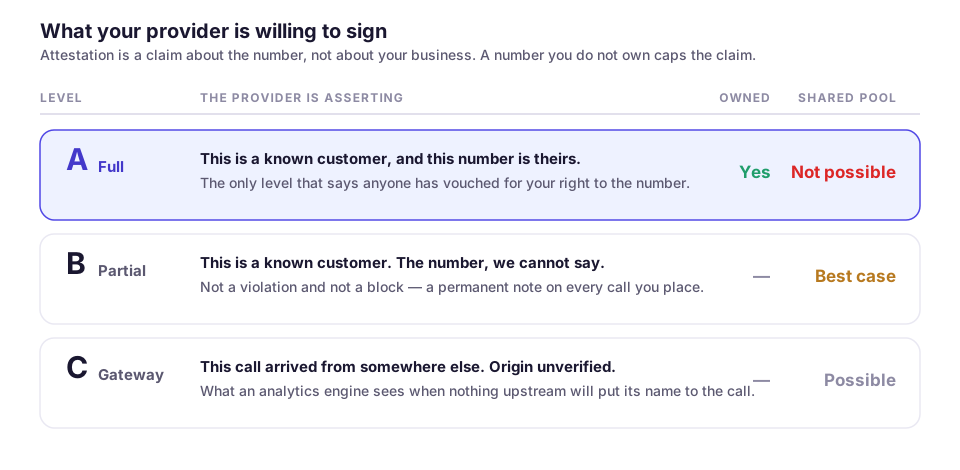
Branded caller ID puts your business name on the recipient's screen instead of a bare number. In North America it works through CNAM, the caller-name record attached to a number, combined with STIR/SHAKEN signing that lets the terminating carrier trust the call is really from you.