Glossary · Compliance
What is STIR/SHAKEN?
- Also called: attestation a, call signing
Reviewed by Sujan ThapaliyaLast updated
Definition
In practice
How stir/shaken actually works
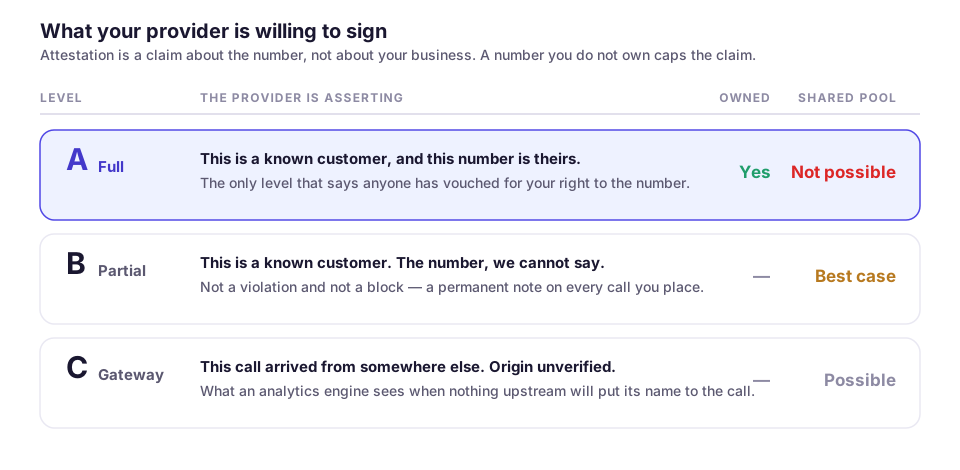
Attestation A means the originating provider knows the customer and confirms they have the right to use that number. Attestation B means the customer is known but the number's provenance is not confirmed. Attestation C means the call was simply passed along, with no verification.
Only calls from numbers you actually own can earn Attestation A. This is the concrete, technical reason that renting numbers from a shared pool produces worse deliverability than owning them.
STIR/SHAKEN does not stop a call being labelled on its own; it gives analytics engines the signal they need to trust your caller ID rather than treating it as suspect.
| Attestation | The carrier asserts | When you get it |
|---|---|---|
| A (full) | It knows the customer and they may use this number | Numbers provisioned directly to you |
| B (partial) | It knows the customer, but not that they own the number | Shared or pooled numbers |
| C (gateway) | Neither | Traffic handed off from elsewhere |
Worked example
STIR/SHAKEN: common questions
What do attestation levels A, B and C mean?
Does Attestation A stop calls being labelled as spam?
Why can a shared number pool only reach B attestation?
Sources
- Combating Spoofed Robocalls with Caller ID Authentication — Federal Communications CommissionThe STIR/SHAKEN framework, the attestation levels carriers sign calls with, and the mandate requiring providers to authenticate caller ID.
- 47 U.S.C. § 227 — Restrictions on the use of telephone equipment — Cornell Legal Information InstituteThe Telephone Consumer Protection Act itself — the consent requirements, calling-hours limits, and private right of action.
- ITU-T Recommendation E.164 — The international public telecommunication numbering plan — International Telecommunication UnionThe international number format, the 15-digit maximum, and how country codes and national numbers compose.
See stir/shaken in the product
Branded caller ID puts your business name on the recipient's screen instead of a bare number. In North America it works through CNAM, the caller-name record attached to a number, combined with STIR/SHAKEN signing that lets the terminating carrier trust the call is really from you.