Glossary · Numbering
What is Private number?
- Also called: private call, no caller id, withheld number
Reviewed by Sujan ThapaliyaLast updated
Definition
In practice
How private number actually works
Withholding is a legitimate feature with a bad reputation, because the people who use it most consistently are the ones recipients least want to hear from. Answer rates for withheld calls are a fraction of those for identified calls, which makes it a poor choice for any business that wants a conversation.
It is also self-defeating on outbound sales calls. A withheld number cannot be called back, so every prospect who would have returned the call is lost, and the calls that do connect start from a position of suspicion.
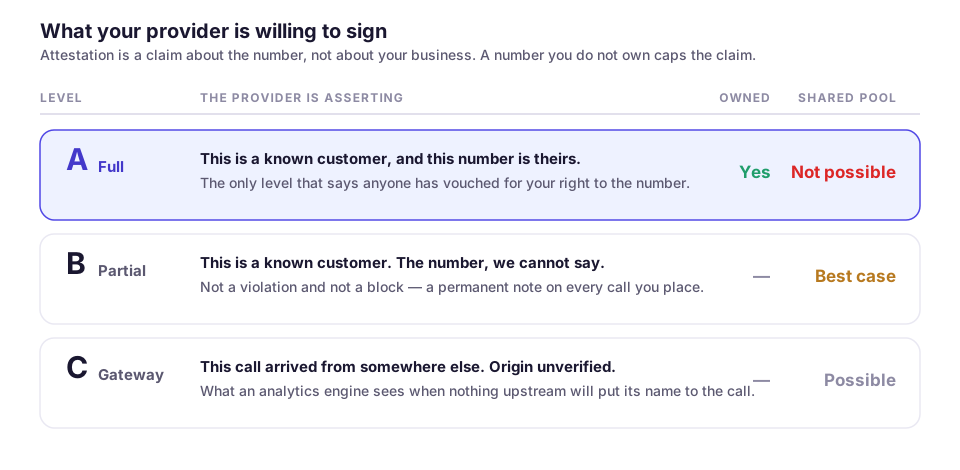
The opposite approach — a registered business name displayed on every call, signed so carriers trust it — is what actually moves answer rates.
Worked example
Private number: common questions
How do I make a private call?
Why do my calls show as private when I did not set that?
Should a business ever withhold its number?
Sources
- Combating Spoofed Robocalls with Caller ID Authentication — Federal Communications CommissionThe STIR/SHAKEN framework, the attestation levels carriers sign calls with, and the mandate requiring providers to authenticate caller ID.
- 47 U.S.C. § 227 — Restrictions on the use of telephone equipment — Cornell Legal Information InstituteThe Telephone Consumer Protection Act itself — the consent requirements, calling-hours limits, and private right of action.
- ITU-T Recommendation E.164 — The international public telecommunication numbering plan — International Telecommunication UnionThe international number format, the 15-digit maximum, and how country codes and national numbers compose.
See private number in the product
Branded caller ID puts your business name on the recipient's screen instead of a bare number. In North America it works through CNAM, the caller-name record attached to a number, combined with STIR/SHAKEN signing that lets the terminating carrier trust the call is really from you.