
Definition
In practice
How truth in caller id act actually works
Intent is the hinge. Displaying a number you own and that reaches you is lawful even when it is chosen for local presence; displaying a number that is not yours in order to get an answer is not.
The practical test is simple: if someone calls the number back, do they reach you? If not, you are on the wrong side of it.
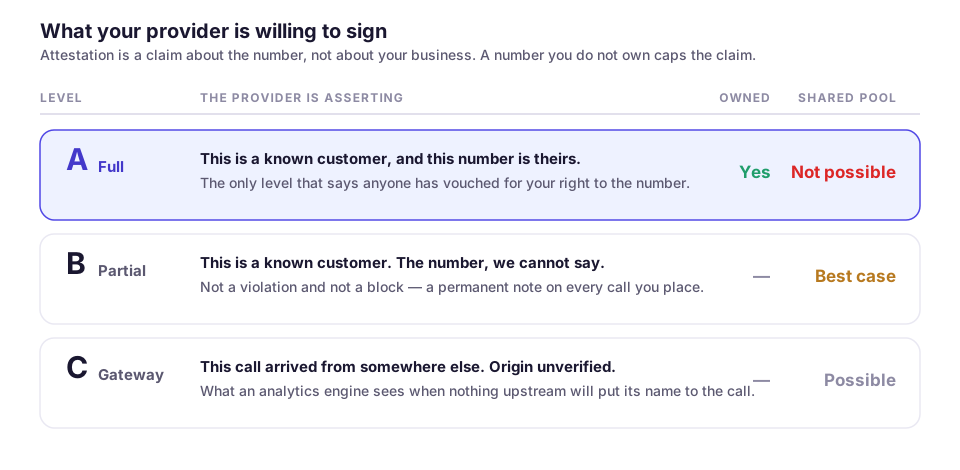
Enforcement has broadened beyond the originating caller. Providers that knowingly carry spoofed traffic have been pursued too, which is why carriers now refuse or downgrade traffic they cannot attribute. For a legitimate business the practical consequence is that identity is no longer optional: unattributable calls are treated as suspect by default.
Worked example
Truth in Caller ID Act: common questions
Is caller ID spoofing illegal?
Can I display a client's number when calling on their behalf?
What are the penalties?
Sources
- Combating Spoofed Robocalls with Caller ID Authentication — Federal Communications CommissionThe STIR/SHAKEN framework, the attestation levels carriers sign calls with, and the mandate requiring providers to authenticate caller ID.
- 47 U.S.C. § 227 — Restrictions on the use of telephone equipment — Cornell Legal Information InstituteThe Telephone Consumer Protection Act itself — the consent requirements, calling-hours limits, and private right of action.
- ITU-T Recommendation E.164 — The international public telecommunication numbering plan — International Telecommunication UnionThe international number format, the 15-digit maximum, and how country codes and national numbers compose.
See truth in caller id act in the product
Branded caller ID puts your business name on the recipient's screen instead of a bare number. In North America it works through CNAM, the caller-name record attached to a number, combined with STIR/SHAKEN signing that lets the terminating carrier trust the call is really from you.