Glossary · Numbering
What is Spam Likely?
- Also called: scam likely, spam risk, call labeling
Reviewed by Sujan ThapaliyaLast updated
Definition
In practice
How spam likely actually works
The main triggers are volume patterns: many short-duration calls from one number, a high unanswered ratio, sudden volume changes, and consumer spam reports.
Labels attach to numbers, not to businesses, so a rented number can arrive already labelled from someone else's campaign, and you will never know why.
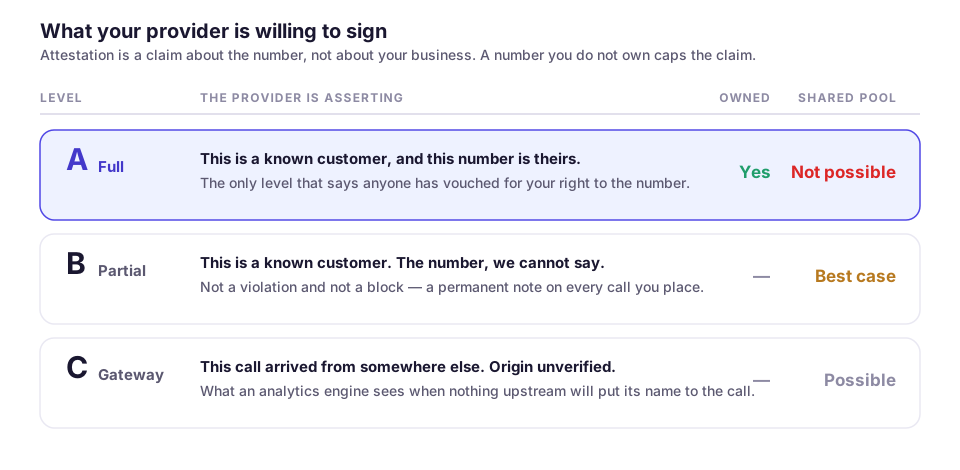
Remediation exists. Each major analytics provider takes remediation requests, but the durable fix is the pattern that caused the label: cap daily volume per number, register CNAM, sign at Attestation A, and keep call durations meaningful.
The label also degrades faster than it recovers. A number can be labelled within days of a bad pattern and take weeks of clean calling to clear, which is why the response to a label is to stop calling from that number rather than to push through and hope the score averages out.
Worked example
Spam Likely: common questions
Who decides that a call is Spam Likely?
How do I get a Spam Likely label removed?
Does changing numbers fix a spam label?
Sources
- Combating Spoofed Robocalls with Caller ID Authentication — Federal Communications CommissionThe STIR/SHAKEN framework, the attestation levels carriers sign calls with, and the mandate requiring providers to authenticate caller ID.
- 47 U.S.C. § 227 — Restrictions on the use of telephone equipment — Cornell Legal Information InstituteThe Telephone Consumer Protection Act itself — the consent requirements, calling-hours limits, and private right of action.
- ITU-T Recommendation E.164 — The international public telecommunication numbering plan — International Telecommunication UnionThe international number format, the 15-digit maximum, and how country codes and national numbers compose.
See spam likely in the product
Branded caller ID puts your business name on the recipient's screen instead of a bare number. In North America it works through CNAM, the caller-name record attached to a number, combined with STIR/SHAKEN signing that lets the terminating carrier trust the call is really from you.