Glossary · Numbering
What is Area code?
- Also called: npa, dialing code, local code
Reviewed by Sujan ThapaliyaLast updated
Definition
In practice
How area code actually works
That link to geography has weakened. Mobile numbers keep their area code when their owner moves, and number portability means a business can hold a code for a city it left years ago, so an area code now signals origin rather than current location.
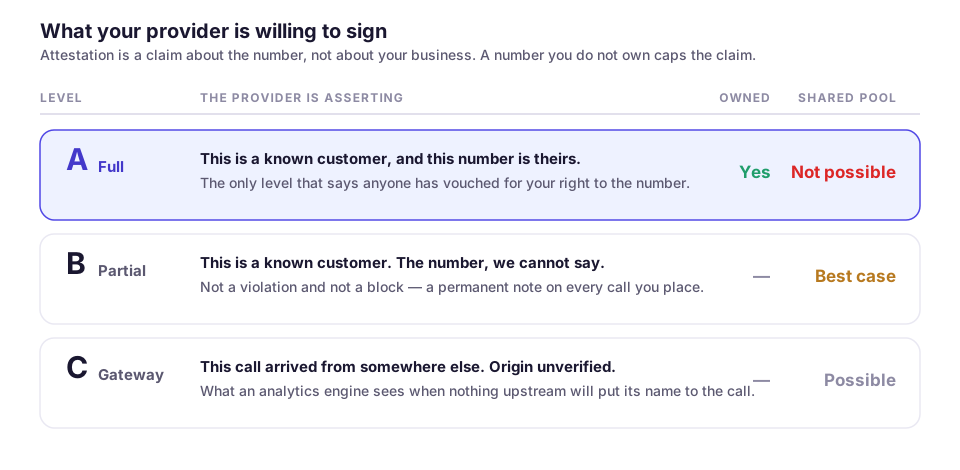
Not every three-digit combination is a valid area code, and pages claiming a call came from an unassigned code are describing a spoofed caller ID rather than a place.
Area codes still matter commercially, because recipients answer familiar codes more readily — which is the entire basis of local presence dialing.
Area codes also carry local meaning that no data set captures. A code can signal an established business district or a specific suburb to people who live there, and that association is what makes local presence work at all — and what makes a newly introduced overlay code perform worse for a while.
Worked example
Area code: common questions
Does an area code tell you where someone is?
Are all three-digit codes valid area codes?
Why do some places need ten-digit dialing?
Sources
- Combating Spoofed Robocalls with Caller ID Authentication — Federal Communications CommissionThe STIR/SHAKEN framework, the attestation levels carriers sign calls with, and the mandate requiring providers to authenticate caller ID.
- 47 U.S.C. § 227 — Restrictions on the use of telephone equipment — Cornell Legal Information InstituteThe Telephone Consumer Protection Act itself — the consent requirements, calling-hours limits, and private right of action.
- ITU-T Recommendation E.164 — The international public telecommunication numbering plan — International Telecommunication UnionThe international number format, the 15-digit maximum, and how country codes and national numbers compose.
See area code in the product
Local presence dialing presents a caller ID in the same area code as the person you are calling, because a familiar area code is answered more often than an unfamiliar one. Done properly it uses numbers you actually own and can receive callbacks on; done badly it is number spoofing with a marketing name.