Glossary · Compliance
What is Robocall?
- Also called: automated call, prerecorded call
Reviewed by Sujan ThapaliyaLast updated
Definition
In practice
How robocall actually works
The legal line is consent and purpose, not technology. A prerecorded appointment reminder to a patient who gave their number is lawful; the same technology selling extended warranties to a purchased list is not.
Marketing robocalls to consumers generally require prior express written consent, a stricter standard than ordinary permission to be contacted.
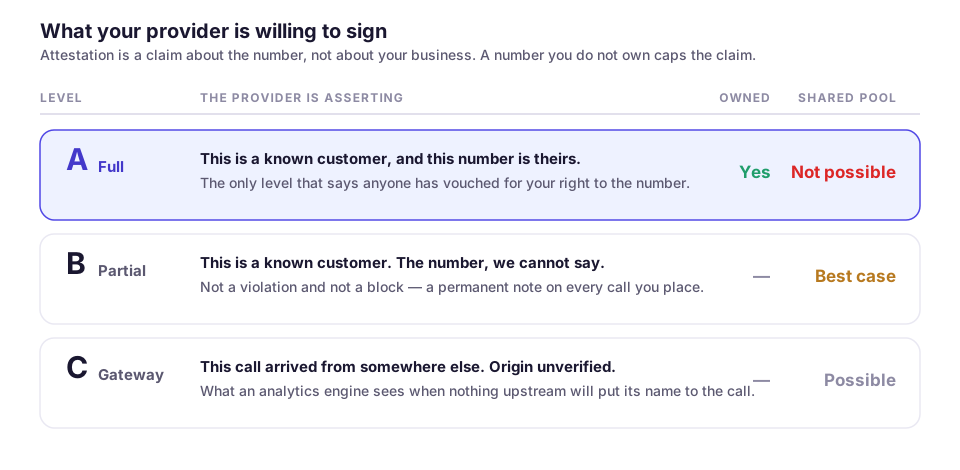
Because carrier analytics score calling patterns rather than intent, lawful automated calling still has to be run carefully — sensible volumes, identifiable caller ID, and numbers that accept callbacks.
The reputational cost is also carried collectively. Analytics engines score patterns rather than intent, so every unwanted automated campaign makes it slightly harder for the next legitimate one to be answered — which is why businesses running lawful automated calls have a direct commercial interest in the rules being enforced.
Worked example
Robocall: common questions
Are all robocalls illegal?
Why do my legitimate automated calls get blocked?
Does an opt-out message make a robocall compliant?
Sources
- Combating Spoofed Robocalls with Caller ID Authentication — Federal Communications CommissionThe STIR/SHAKEN framework, the attestation levels carriers sign calls with, and the mandate requiring providers to authenticate caller ID.
- 47 U.S.C. § 227 — Restrictions on the use of telephone equipment — Cornell Legal Information InstituteThe Telephone Consumer Protection Act itself — the consent requirements, calling-hours limits, and private right of action.
- ITU-T Recommendation E.164 — The international public telecommunication numbering plan — International Telecommunication UnionThe international number format, the 15-digit maximum, and how country codes and national numbers compose.
See robocall in the product
Voice broadcasting sends one recorded or synthesised message to thousands of phone numbers at once. It is used for outage notices, appointment reminders, school closures, and event alerts, anywhere a short, identical message needs to reach a lot of people quickly.