
Glossary · Call centre operations
What is ACD (automatic call distributor)?
- Also called: automatic call distribution, call distribution system
Reviewed by Sujan ThapaliyaLast updated
Definition
In practice
How acd (automatic call distributor) actually works
The rules are where the value sits. Routing by skill means the first agent to answer is one who can finish the call; routing by priority means a support contract is honoured without a human deciding; routing by hours means nobody has to remember to change anything at five o'clock.
An ACD is also the source of inbound reporting. Service level, average speed of answer, abandonment and occupancy are all computed from what it records, which is why an inbound operation without one is guessing.
Modern platforms fold the ACD together with the IVR, the queue and the agent interface, so the distinction matters mainly when comparing products that price them separately.
Worked example
ACD (automatic call distributor): common questions
What does an ACD do?
Is an ACD the same as an IVR?
Do small teams need an ACD?
Sources
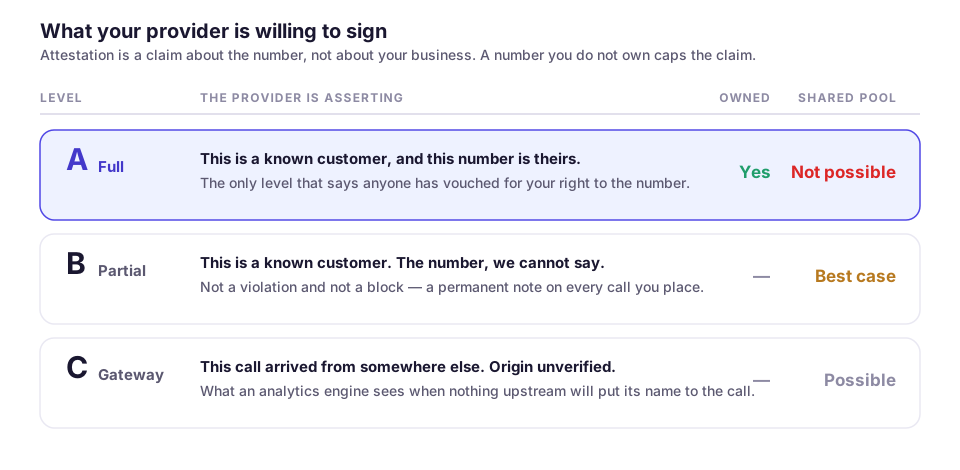
- Combating Spoofed Robocalls with Caller ID Authentication — Federal Communications CommissionThe STIR/SHAKEN framework, the attestation levels carriers sign calls with, and the mandate requiring providers to authenticate caller ID.
- 47 U.S.C. § 227 — Restrictions on the use of telephone equipment — Cornell Legal Information InstituteThe Telephone Consumer Protection Act itself — the consent requirements, calling-hours limits, and private right of action.
- ITU-T Recommendation E.164 — The international public telecommunication numbering plan — International Telecommunication UnionThe international number format, the 15-digit maximum, and how country codes and national numbers compose.
See acd (automatic call distributor) in the product
A call queue holds inbound callers in order and distributes them to whichever agent frees up next, instead of ringing one phone and failing. A callback option lets the caller keep their place and hang up, which is what actually reduces abandoned calls.