Glossary · Numbering
What is Rich call data?
- Also called: rcd, branded calling data, call reason display
Reviewed by Sujan ThapaliyaLast updated
Definition
In practice
How rich call data actually works
The difference from CNAM is authentication. A caller name is looked up from a database; rich call data travels with the call inside the signed identity, so it cannot be attached by someone who is not entitled to it.
Support is uneven across carriers and handsets, which is why the practical position today is that it helps where it is supported and costs nothing where it is not.
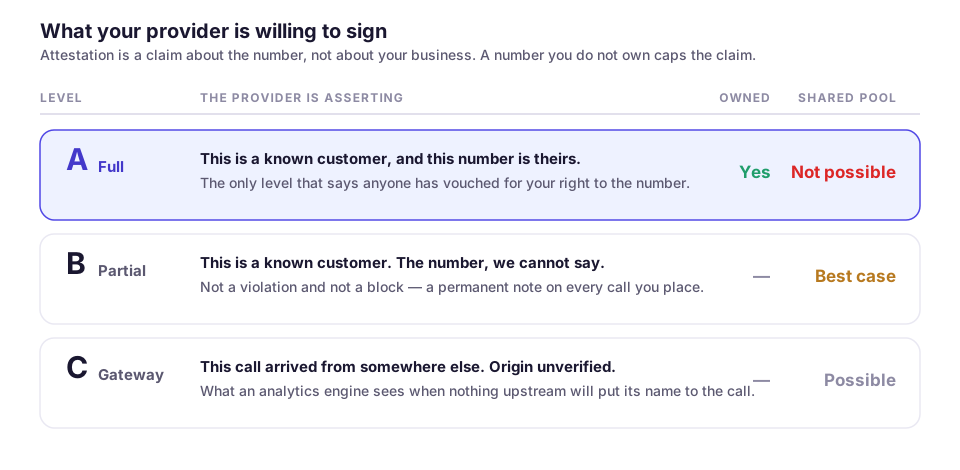
It depends on the foundations being right: numbers you own, full attestation, and a registered business identity. Without those there is nothing to enrich.
Adoption is also a chicken-and-egg problem worth understanding before budgeting for it. Handset support drives carrier support and vice versa, so coverage is uneven and will stay that way for a while. Treat it as an upside where it lands rather than as the reason answer rates will improve.
Worked example
Rich call data: common questions
What is the difference between rich call data and CNAM?
Do all phones show rich call data?
What do I need before rich call data is useful?
Sources
- Combating Spoofed Robocalls with Caller ID Authentication — Federal Communications CommissionThe STIR/SHAKEN framework, the attestation levels carriers sign calls with, and the mandate requiring providers to authenticate caller ID.
- 47 U.S.C. § 227 — Restrictions on the use of telephone equipment — Cornell Legal Information InstituteThe Telephone Consumer Protection Act itself — the consent requirements, calling-hours limits, and private right of action.
- ITU-T Recommendation E.164 — The international public telecommunication numbering plan — International Telecommunication UnionThe international number format, the 15-digit maximum, and how country codes and national numbers compose.
See rich call data in the product
Branded caller ID puts your business name on the recipient's screen instead of a bare number. In North America it works through CNAM, the caller-name record attached to a number, combined with STIR/SHAKEN signing that lets the terminating carrier trust the call is really from you.