
Glossary · Numbering
What is DID (direct inward dialing)?
- Also called: direct inward dialing, ddi, direct dial number
Reviewed by Sujan ThapaliyaLast updated
Definition
In practice
How did (direct inward dialing) actually works
The economics changed with VoIP. DIDs used to require blocks of numbers mapped onto physical lines; now a number is a routing rule, so a business can hold as many as it needs and point each wherever it likes.
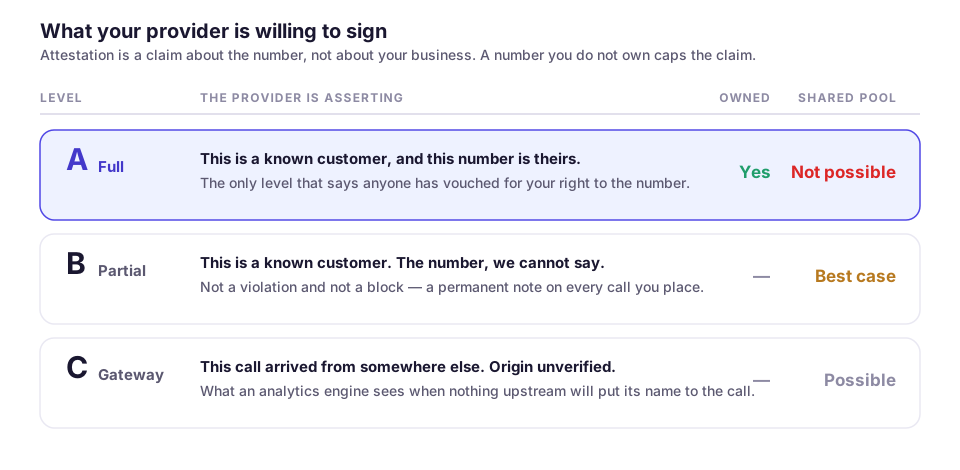
For outbound calling, DIDs are what make caller identity honest: the number presented is a real number that rings back to the person who called.
The common mistake is buying DIDs without deciding what answers them out of hours. A direct number that rings unanswered at 6pm is worse than a switchboard that routes to a queue.
DIDs also change the shape of inbound traffic in a way worth planning for. Publishing direct numbers removes the switchboard's filtering, so individuals receive calls that reception used to triage — including the sales calls. Teams that hand out DIDs without an out-of-hours or busy path usually regret it within a month.
Worked example
DID (direct inward dialing): common questions
What is a DID number?
How is a DID different from an extension?
Do DIDs cost more than a main number?
Sources
- Combating Spoofed Robocalls with Caller ID Authentication — Federal Communications CommissionThe STIR/SHAKEN framework, the attestation levels carriers sign calls with, and the mandate requiring providers to authenticate caller ID.
- 47 U.S.C. § 227 — Restrictions on the use of telephone equipment — Cornell Legal Information InstituteThe Telephone Consumer Protection Act itself — the consent requirements, calling-hours limits, and private right of action.
- ITU-T Recommendation E.164 — The international public telecommunication numbering plan — International Telecommunication UnionThe international number format, the 15-digit maximum, and how country codes and national numbers compose.
See did (direct inward dialing) in the product
A toll-free number is one the called business pays for rather than the caller. In North America they use the prefixes 800, 833, 844, 855, 866, 877 and 888, which are functionally identical — the newer ones exist only because the older ones ran out. They signal national reach; a local number signals proximity.