Glossary · Compliance
What is Snowshoeing?
- Also called: number rotation, spreading call volume
Reviewed by Sujan ThapaliyaLast updated
Definition
In practice
How snowshoeing actually works
The name comes from distributing weight across a wide surface to avoid sinking. Detection is straightforward now: many numbers from one originator, each with low volume, short average duration and similar calling patterns.
It also breaks the business case for the numbers. Callbacks land on numbers nobody monitors, and the reputation that a consistent identity would have built never accumulates.
The legitimate version is capacity planning: a number of owned numbers proportionate to genuine regional presence, each with sensible daily caps and a working callback path.
The pattern is also self-defeating commercially, which is the part operators miss. Spreading calls across forty numbers means forty numbers nobody monitors, so every callback — the highest-intent call any campaign produces — reaches an unattended line. The technique loses the conversations it was meant to protect.
Worked example
Snowshoeing: common questions
Is rotating numbers the same as snowshoeing?
How do carriers detect it?
What should I do instead?
Sources
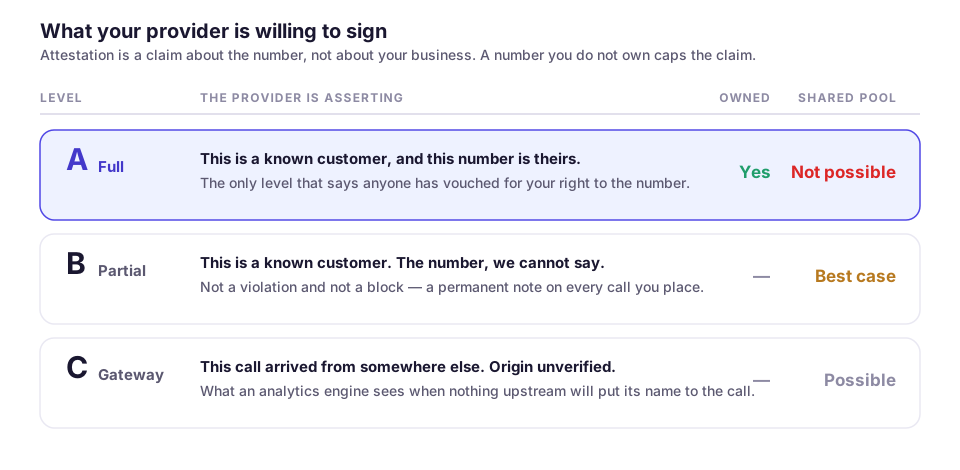
- Combating Spoofed Robocalls with Caller ID Authentication — Federal Communications CommissionThe STIR/SHAKEN framework, the attestation levels carriers sign calls with, and the mandate requiring providers to authenticate caller ID.
- 47 U.S.C. § 227 — Restrictions on the use of telephone equipment — Cornell Legal Information InstituteThe Telephone Consumer Protection Act itself — the consent requirements, calling-hours limits, and private right of action.
- ITU-T Recommendation E.164 — The international public telecommunication numbering plan — International Telecommunication UnionThe international number format, the 15-digit maximum, and how country codes and national numbers compose.
See snowshoeing in the product
Branded caller ID puts your business name on the recipient's screen instead of a bare number. In North America it works through CNAM, the caller-name record attached to a number, combined with STIR/SHAKEN signing that lets the terminating carrier trust the call is really from you.