Not an assigned area code
013 is not a US area code: here's what it actually is
Reviewed by Sujan ThapaliyaLast updated
What is area code 013?
Area code 013
- Type
- Not a valid area code
- Coverage
- Not assigned
Background
About 013
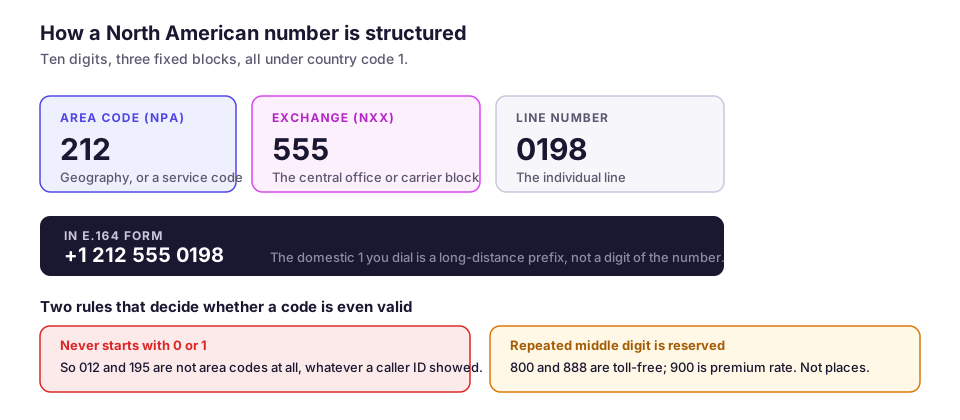
013 is not a valid North American area code; area codes never start with 0. As an international prefix, 013 is a carrier-selection code in Israel.
Unwanted calls
Why you are getting 013 calls
The reason an unfamiliar 013 number keeps calling is usually neighbour spoofing: automated systems fake a caller ID in the recipient’s own area code because a local-looking number is answered far more often than an unfamiliar one. The number displayed is frequently not the number placing the call, and may belong to someone with no idea it is being used.
What actually helps:
- Let unknown numbers go to voicemail. Automated diallers rarely leave a message; a real caller will.
- Do not press any key to be removed. On an automated call, a keypress confirms a live human and increases the volume you get.
- Register on the national Do Not Call list and report unwanted calls. It does not stop fraud, but it does constrain legitimate telemarketers.
- Turn on your carrier’s call-filtering service. Filtering now uses STIR/SHAKEN attestation, which is why properly signed business calls get through and spoofed ones increasingly do not.
If you are calling into 013 rather than receiving from it, the relevant reading is putting your business name on the call — the same signals that decide whether a call from this code gets answered decide whether yours does.
No one can legitimately have a 013 number
Frequently asked questions
Where is area code 013?
Is a call from 013 a scam?
Why did I get a call from 013 if it is not a real area code?
Can I block 013 calls?
Should I call a 013 number back?
Sources
- North American Numbering Plan Administrator — NANPAArea code assignments, relief planning, and which codes are in service across the North American Numbering Plan.
- ITU-T Recommendation E.164 — The international public telecommunication numbering plan — International Telecommunication UnionThe international number format, the 15-digit maximum, and how country codes and national numbers compose.
Make your business calls get answered
Owned numbers, branded caller ID, and Attestation A signing on every call: the three things that decide whether your calls get labelled or answered.
- Branded caller ID (CNAM)
- STIR/SHAKEN Attestation A
- No subscription