Utah · United States
Area code 801: where it is and who calls from it
- MT (UTC−7/−6)
- Overlays: 385
Reviewed by Sujan ThapaliyaLast updated
What is area code 801?
Area code 801
- Type
- Geographic area code
- State / province
- Utah
- Country
- United States
- Main cities
- Salt Lake City, Ogden, Provo, Sandy, Layton, West Valley City
- Time zone
- MT (UTC−7/−6)
- Overlay codes
- 385
- Same territory, different code.
- In service since
- 1947
Step by step
How to call an 801 number
The same ten digits, dialled three different ways depending on where you are calling from.
- 1
Within the same area code
Many carriers still allow seven digits inside 801, but overlays have made ten-digit dialling the safe default — 801 overlaps with 385, so seven digits is ambiguous. Dial 801 followed by the seven-digit number. - 2
From elsewhere in the US or Canada
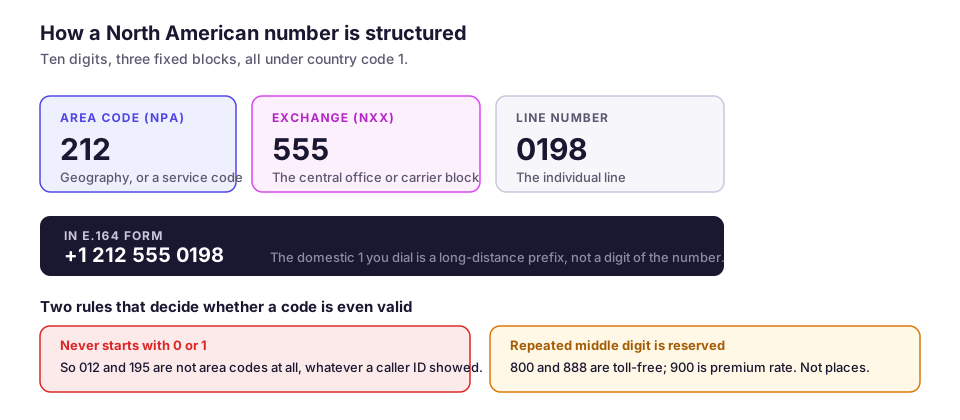
Dial 1, then 801, then the seven-digit number — eleven digits in total. The leading 1 is the North American long-distance prefix, not part of the number. - 3
From outside North America
Dial your country's exit code, then 1 for the North American Numbering Plan, then 801, then the seven-digit number. On a mobile, type + instead of the exit code: +1 801 followed by the number works from any country.
Background
About 801
801 covers the Wasatch Front, the strip of Utah where roughly 80% of the state's population lives, from Ogden and Layton through Salt Lake City and Sandy down to Provo.
Unwanted calls
Why you are getting 801 calls
The reason an unfamiliar 801 number keeps calling is usually neighbour spoofing: automated systems fake a caller ID in the recipient’s own area code because a local-looking number is answered far more often than an unfamiliar one. The number displayed is frequently not the number placing the call, and may belong to someone with no idea it is being used.
What actually helps:
- Let unknown numbers go to voicemail. Automated diallers rarely leave a message; a real caller will.
- Do not press any key to be removed. On an automated call, a keypress confirms a live human and increases the volume you get.
- Register on the national Do Not Call list and report unwanted calls. It does not stop fraud, but it does constrain legitimate telemarketers.
- Turn on your carrier’s call-filtering service. Filtering now uses STIR/SHAKEN attestation, which is why properly signed business calls get through and spoofed ones increasingly do not.
If it is your 801 business number being labelled as spam, the cause is different and fixable: unregistered caller ID name, low attestation, or a volume pattern carriers read as automated. Owning your numbers, registering CNAM and signing at Attestation A is what resolves it.
If you are calling into 801 rather than receiving from it, the relevant reading is local presence dialing — the same signals that decide whether a call from this code gets answered decide whether yours does.
Frequently asked questions
Where is area code 801?
Is a call from 801 a scam?
What time zone is 801 in?
Can I get an 801 phone number?
What is the difference between 801 and 385?
Sources
- North American Numbering Plan Administrator — NANPAArea code assignments, relief planning, and which codes are in service across the North American Numbering Plan.
- ITU-T Recommendation E.164 — The international public telecommunication numbering plan — International Telecommunication UnionThe international number format, the 15-digit maximum, and how country codes and national numbers compose.
Get an 801 number for your business
A local 801 number, owned by you, with your business name on the caller ID and callbacks routed straight to your team. People answer local numbers, and they answer branded ones far more often still.
- Branded caller ID (CNAM)
- STIR/SHAKEN Attestation A
- No subscription